







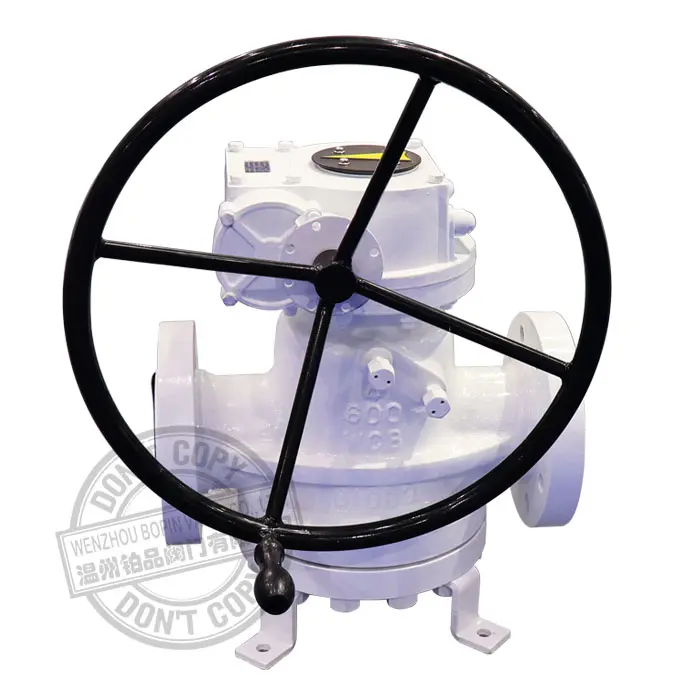
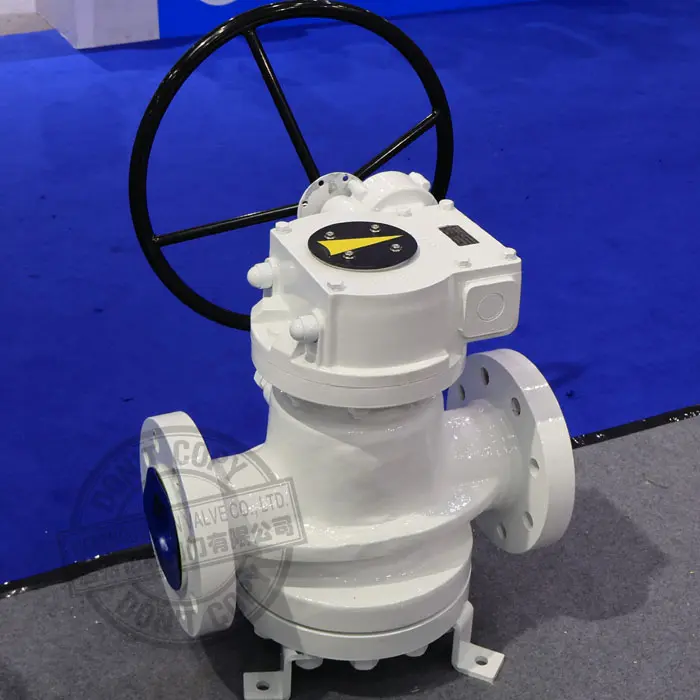
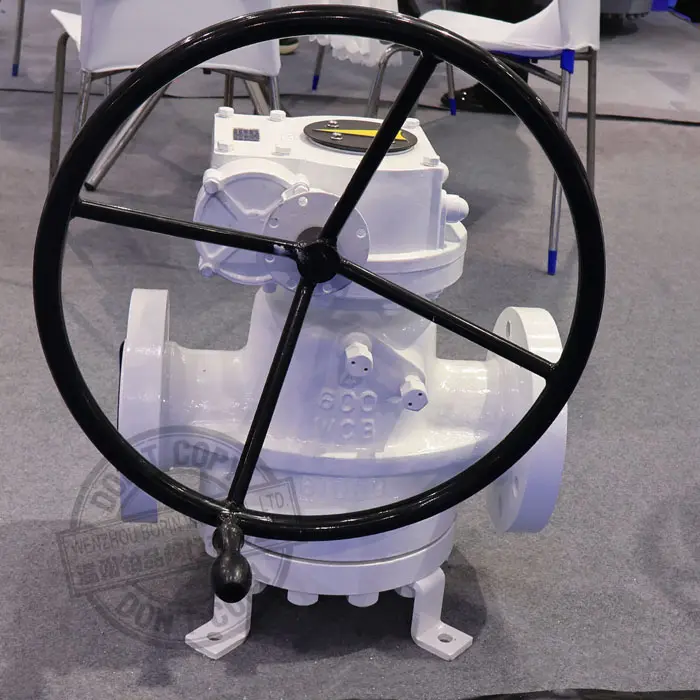
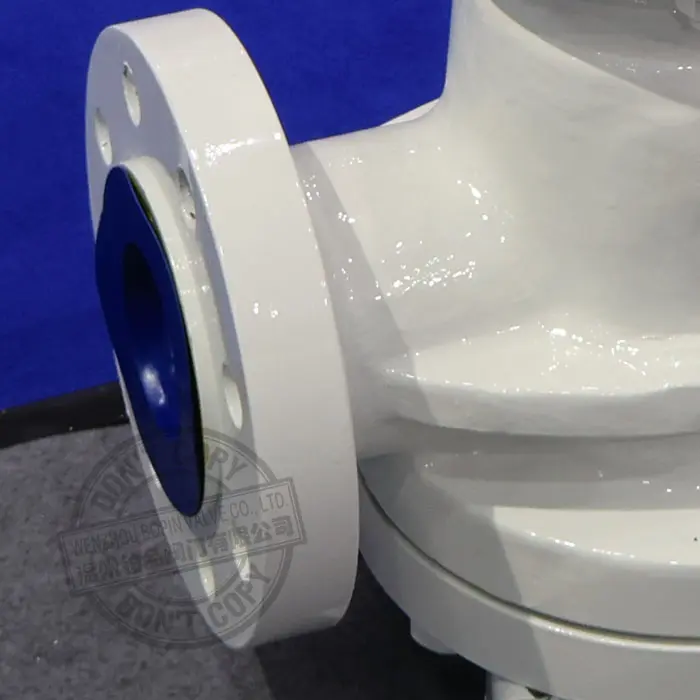
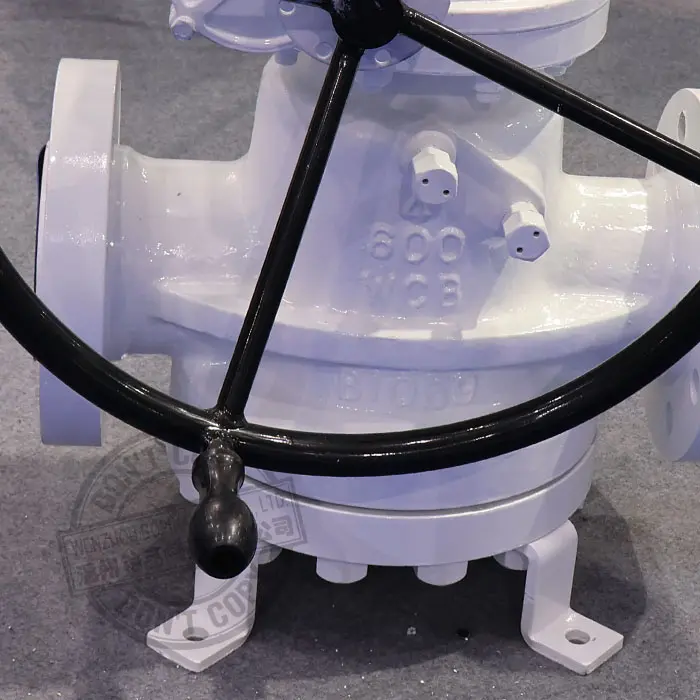
API 599 Worm Gear Operated Cast Steel A216 WCB Flange End Pressure Balance Lubricated Plug Valve
A pressure-balanced lubricated plug valve uses a tapered or cylindrical plug with lubrication injected between the plug and body seating surfaces. The pressure balancing mechanism decreases the force acting on the plug, resulting in easier operation and reduced friction.
The worm gear system is commonly installed on larger valves where manual lever operation would require excessive force. Through a gear reduction mechanism, operators can open or close the valve smoothly with minimal effort.
Typical design specifications include:
- Design Standard: API 599
- Pipeline Standard: API 6D
- Face-to-face: ASME B16.10
- Flange Standard: ASME B16.5
- Pressure Testing: API 598
- Fire Safe Design: API 607 or API 6FA
- Material: ASTM A216 WCB Cast Steel
- Pressure Class: Class 150–Class 900
- Size Range: NPS 2–NPS 24
- Connection Type: Flanged End
- Operation: Worm Gear
- Temperature Range: -29°C to 425°C
ASTM A216 WCB Cast Steel Material
ASTM A216 WCB is one of the most commonly used carbon steel casting materials in industrial valve manufacturing. It is widely recognized for its balance of mechanical properties, weldability, and cost-effectiveness.
Advantages include:
High strength
WCB cast steel provides excellent structural integrity under pressure and mechanical loading conditions.
Good machinability
The material can be accurately machined to maintain dimensional tolerances and smooth sealing surfaces.
Excellent weldability
WCB components can be repaired and fabricated efficiently.
Wide temperature capability
The material performs effectively under both moderate and elevated temperatures.
Because of these characteristics, WCB cast steel is extensively used for valves in oil refining plants, steam systems, and process industries.
Pressure Balanced Lubricated Design
The pressure-balanced design is a major feature of this plug valve configuration.
Traditional lubricated plug valves may require significant operating torque because process pressure acts directly on the plug surface. In pressure-balanced construction, a balancing mechanism reduces the pressure differential acting on the plug.
Benefits include:
Reduced operating torque
The balancing system lowers friction forces, enabling easier operation even under high-pressure conditions.
Longer service life
Lower friction minimizes wear between the plug and body seating surfaces.
Improved sealing capability
Lubrication creates a sealing film that helps prevent leakage.
Better operational reliability
Smooth movement reduces the possibility of sticking or seizure during operation.
Lower maintenance requirements
Reduced wear means less frequent maintenance interventions.
The lubricating sealant also performs multiple functions:
- Reduces friction
- Improves sealing performance
- Protects against corrosion
- Prevents metal-to-metal galling
- Extends service life
Worm Gear Operation
Large plug valves often require substantial torque for operation. Worm gear actuation solves this challenge through mechanical advantage.
Major advantages include:
Smooth operation
The gear mechanism allows gradual and controlled movement.
Reduced operator effort
Operators can actuate large valves using relatively small force.
Self-locking capability
Worm gear systems typically prevent accidental movement caused by vibration or pipeline forces.
Improved safety
Controlled operation minimizes sudden opening or closing.
Suitability for automation
Worm gear units can easily be adapted for electric or pneumatic actuators.
For pipeline systems with large diameters and high-pressure ratings, worm gear operation becomes essential.
Flanged End Connection
The valve adopts ASME flange end connections that provide secure installation and convenient maintenance.
Benefits include:
Reliable sealing
Bolted flange connections ensure leak-tight performance.
Easy installation
Field installation is straightforward using standard piping practices.
Simple maintenance
The valve can be removed without cutting the pipeline.
Wide compatibility
Flanges can match different piping systems and standards.
Common flange ratings include:
- Class 150
- Class 300
- Class 600
- Class 900
Higher pressure classes may also be available depending on design requirements.
Working Principle
The pressure-balanced lubricated plug valve operates using quarter-turn movement.
During operation:
- The handwheel rotates the worm gear mechanism.
- The worm gear turns the plug assembly.
- The plug rotates approximately 90 degrees.
- The internal flow passage aligns or misaligns with the pipeline.
- Flow is either allowed or completely shut off.
In the open position, the port inside the plug aligns with the pipeline bore, allowing unrestricted flow.
In the closed position, the solid portion of the plug blocks the flow path and creates complete shutoff.
The injected lubricant forms a sealing layer between contact surfaces to ensure reliable isolation.
Performance Features
Bubble-tight shutoff
Accurate machining and lubrication technology provide excellent sealing performance.
Low torque operation
Pressure balancing minimizes required operating force.
Fire-safe capability
Optional fire-safe designs maintain sealing performance during fire conditions.
Bi-directional sealing
The valve can effectively seal against flow in either direction.
Corrosion resistance
Proper coatings and lubrication improve resistance to environmental effects.
Long operational life
Reduced friction extends service duration.
Low pressure drop
Full-port designs minimize resistance to fluid flow.
Heavy-duty construction
WCB steel construction ensures durability under harsh operating conditions.
Application Industries
API 599/API 6D pressure-balanced lubricated plug valves are widely used in numerous industries.
Oil and gas industry
Applications include:
- Crude oil transportation
- Pipeline transmission
- Storage terminals
- Offshore platforms
- Natural gas processing
Petrochemical industry
Common uses include:
- Chemical process lines
- Hydrocarbon processing
- Solvent systems
Refining industry
Applications include:
- Distillation units
- Catalytic cracking units
- Process piping systems
Power generation
Suitable for:
- Steam systems
- Fuel handling systems
- Auxiliary pipelines
Industrial processing plants
Used in:
- Water systems
- Utility pipelines
- Process control systems
Testing and Quality Assurance
Each valve undergoes rigorous inspection and testing before shipment.
Typical testing procedures include:
- Shell pressure testing
- Seat leakage testing
- Hydrostatic testing
- Air leakage testing
- Material inspection
- Dimensional inspection
- Nondestructive testing
- Coating inspection
- Functional operation testing
Testing follows API 598 requirements to ensure performance and reliability.
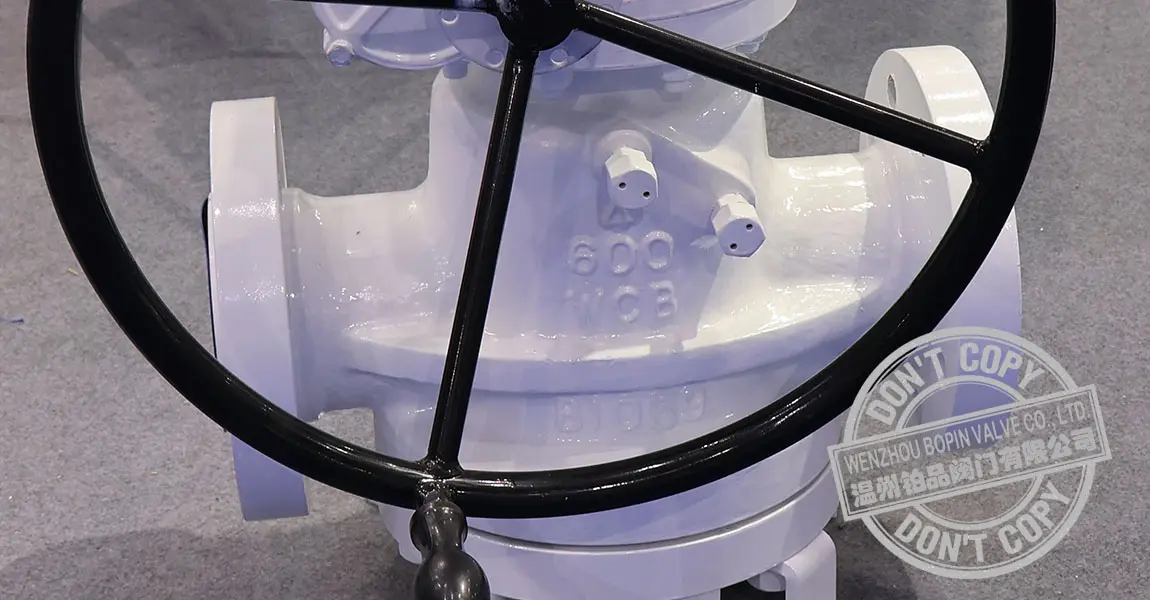
The API 599 API 6D Worm Gear Operated Cast Steel A216 WCB Flange End Pressure Balanced Lubricated Plug Valve combines reliable shutoff capability, reduced operating torque, and heavy-duty construction into one efficient flow control solution. Its pressure-balanced mechanism, lubricated sealing technology, and worm gear operation provide excellent performance under demanding service conditions.
For industrial systems requiring durable isolation, dependable sealing, and long operational life, this type of plug valve remains an excellent choice for modern pipeline and process applications.