







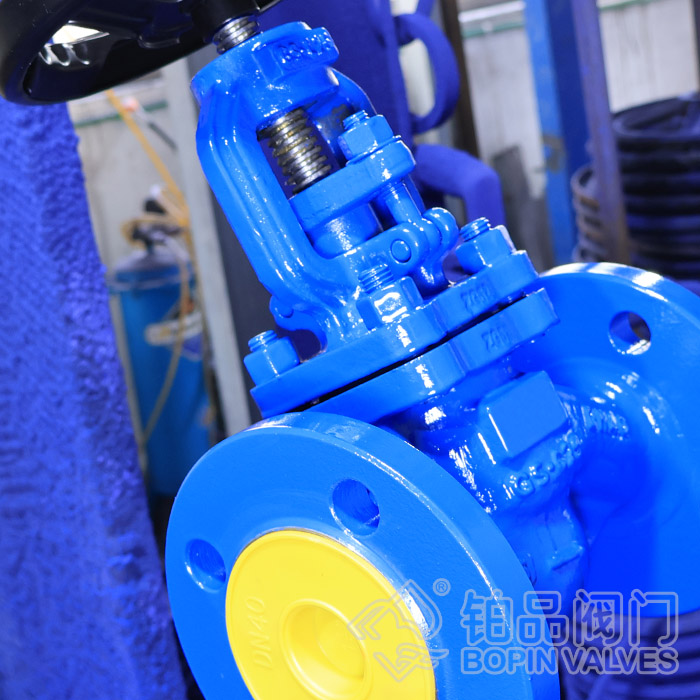
DIN Globe Valve Manufacturers
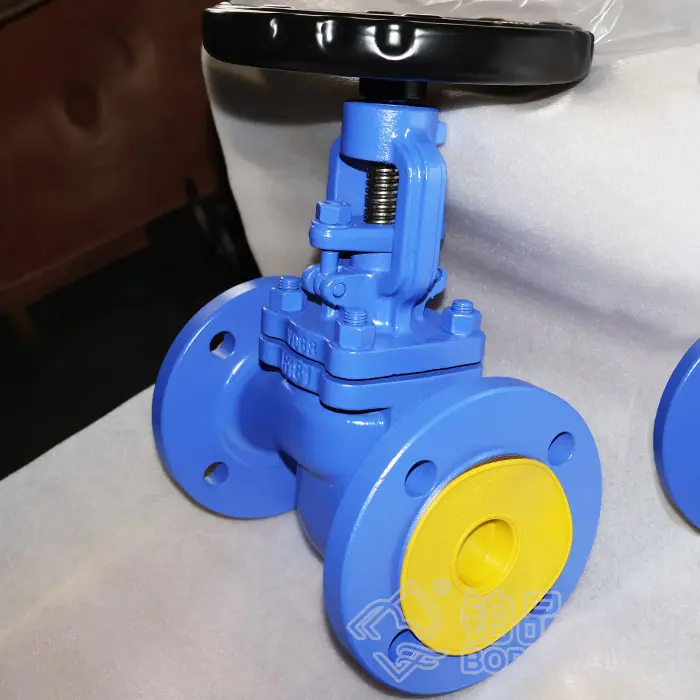
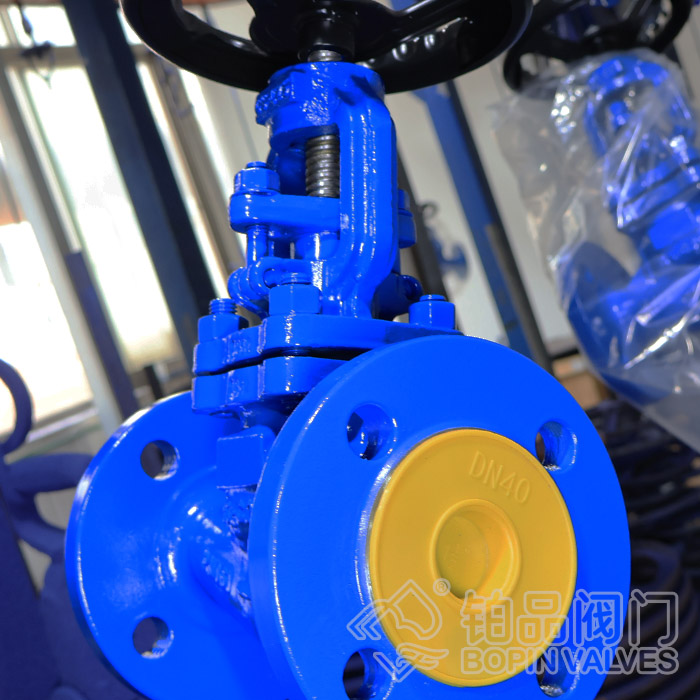
A DIN globe valve without bellows is a conventional globe valve that uses stem packing and a gland arrangement rather than a metal bellows to prevent leakage around the valve stem. It is widely used for reliable shut-off and flow regulation in industrial piping systems, particularly for steam, water, oil, gas, chemical, and other general process services.
BOPIN supplies DIN-standard globe valves in different pressure ratings, sizes, end connections, body materials, and trim configurations to meet various industrial requirements.
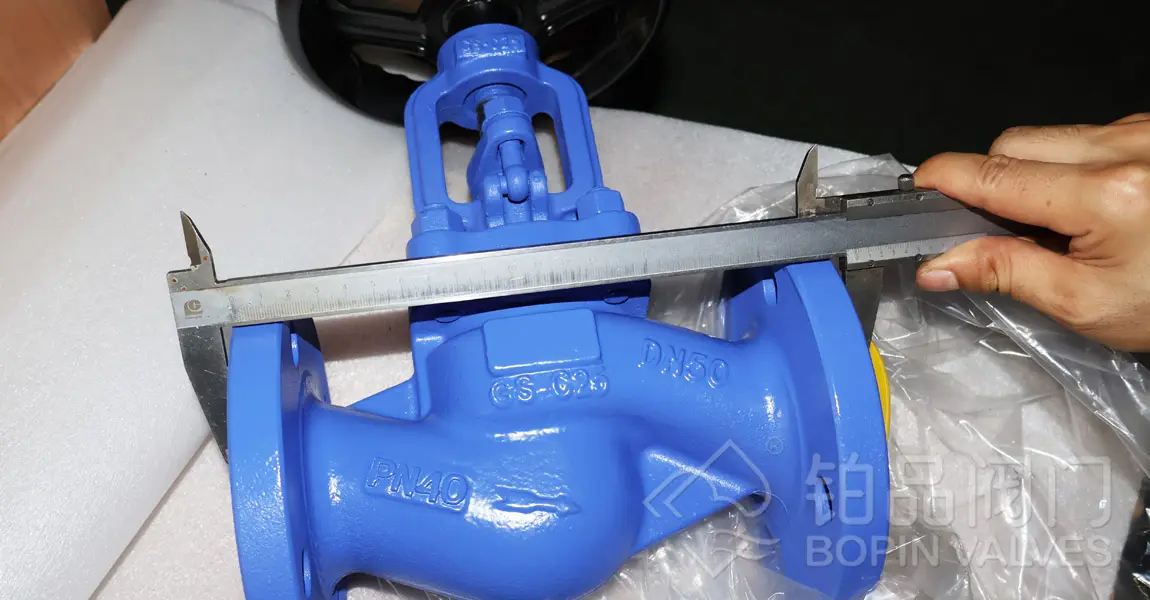
1. DIN Globe Valve Types
DIN globe valves without bellows can be manufactured in several configurations according to piping requirements and installation conditions.
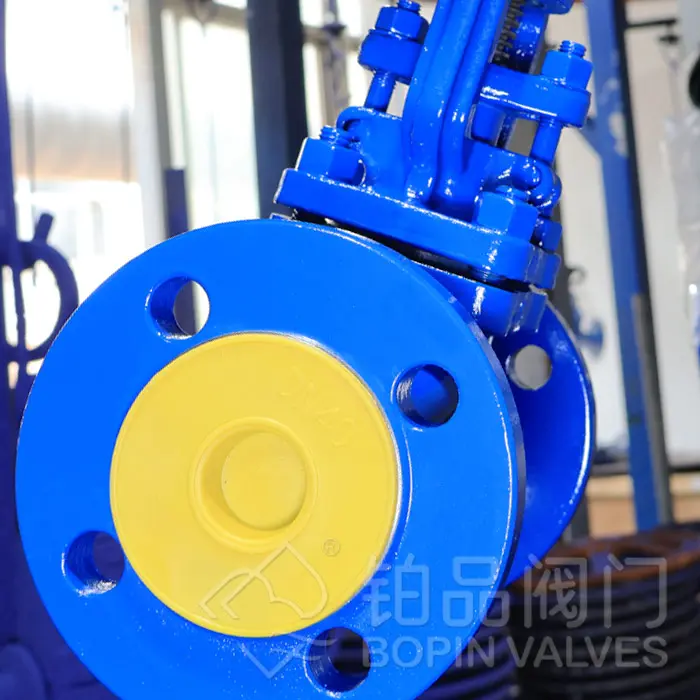
Flanged-End DIN Globe Valve
Flange-end globe valves are commonly used in industrial pipelines because they are convenient to install and remove for maintenance. Flange dimensions can be manufactured according to the specified DIN/EN flange standard and customer requirements.
Butt-Welded-End Globe Valve
Butt-welded globe valves are directly welded to the pipeline. They provide a compact connection and are suitable for high-temperature, high-pressure, and process piping where a permanent connection is preferred.
Socket-Welded-End Globe Valve
Socket-welded designs are commonly used for smaller-diameter piping systems. The valve is inserted into the socket of the pipe and welded around the connection.
Angle-Type Globe Valve
An angle globe valve changes the flow direction by approximately 90 degrees. This configuration can simplify piping arrangements and reduce the need for additional elbows in certain installations.
Straight-Pattern Globe Valve
The straight-pattern design is the traditional globe valve configuration, with the inlet and outlet arranged along the same general axis. It is widely used for throttling and shut-off service.
2. Valve Standards
DIN globe valves should be designed, manufactured, inspected, and tested according to the applicable standards specified in the customer's technical requirements.
Common standards associated with DIN globe valves may include:
- DIN EN 13709 – industrial globe and check valves
- DIN EN 12516 – industrial valve shell design and pressure-temperature considerations
- DIN EN 1092 – flanges and their joint dimensions
- EN 558 – face-to-face and center-to-face dimensions for valves
- EN 12266 – pressure testing of metallic valves
The exact standard combination depends on the valve type, connection, pressure rating, material, and customer specification.
For international projects, BOPIN can also review requirements involving EN, DIN, ASME, API, and other recognized standards to ensure that the selected valve is suitable for the intended pipeline.
3. Main Valve Features
A DIN globe valve without bellows offers several practical advantages.
Reliable Shut-Off
The disc and seat are designed to provide dependable closing performance when the valve is properly selected and operated.
Flow Regulation
Unlike a gate valve, a globe valve can be used for throttling and controlling flow when the application and operating conditions are suitable.
Robust Body Construction
The body can be manufactured from carbon steel, stainless steel, alloy steel, or other specified materials to accommodate different media and temperatures.
Conventional Stem Packing
Without a bellows assembly, the valve uses packing around the stem. This makes the construction relatively simple and economical while providing effective external sealing when correctly assembled and maintained.
Easy Maintenance
Packing can generally be inspected, adjusted, or replaced without replacing a bellows assembly. This can be beneficial for applications where straightforward maintenance is preferred.
Multiple Connection Options
Depending on the design, DIN globe valves can be supplied with flanged, butt-welded, socket-welded, or other connection configurations.
Handwheel or Actuator Operation
Manual handwheel operation is common, while electric, pneumatic, hydraulic, or gear operators can be selected for larger valves or automated systems.
4. Optional Valve Materials
Material selection should be based on the medium, temperature, pressure, corrosion conditions, and customer requirements.
Carbon Steel
Carbon steel such as 1.0619 / GS-C25 is commonly selected for general industrial services, water, oil, steam, and other applications within its applicable pressure-temperature limits.
Stainless Steel
Stainless steel options such as 1.4308 / CF8 and 1.4408 / CF8M provide improved corrosion resistance and are suitable for many chemical, food-processing, petrochemical, and general process applications.
Low-Temperature Materials
For low-temperature services, suitable low-temperature carbon steel, stainless steel, or alloy materials should be selected according to the specified design temperature and impact requirements.
Alloy Steel
Alloy steel can be considered for demanding high-temperature services where enhanced mechanical strength and temperature resistance are required.
Trim materials can also be customized. Typical combinations may include stainless steel stems, stainless steel discs, hardfaced seating surfaces, and other special alloys.
5. Applications
DIN globe valves without bellows are used across many industrial sectors.
Steam Systems
They are widely applied to steam pipelines, boiler systems, heating systems, condensate lines, and industrial steam distribution.
Power Plants
Globe valves can be used for auxiliary steam, feedwater-related services, cooling systems, and other plant piping where shut-off or throttling is required.
Chemical Industry
Stainless-steel versions can be selected for many corrosive or chemically sensitive media, provided material compatibility is confirmed.
Petrochemical and Oil & Gas
Globe valves are used for process fluids, hydrocarbon services, utility systems, and other applications where reliable control and isolation are required.
Water Treatment
They can be used for industrial water, treated water, cooling water, and related utility systems.
General Industrial Piping
Manufacturing plants, heating systems, shipbuilding, metallurgy, and other industrial facilities can use DIN globe valves for pipeline control.
6. Operation Manual
Correct operation is important for extending valve service life.
Opening the Valve
- Confirm that the valve and pipeline are suitable for the operating medium.
- Check the valve position and surrounding equipment.
- Rotate the handwheel gradually in the opening direction.
- Avoid sudden opening, particularly in steam or high-pressure systems.
- Monitor pressure and flow during operation.
Closing the Valve
- Rotate the handwheel gradually in the closing direction.
- Allow the disc to approach the seat smoothly.
- Stop when the valve reaches the fully closed position.
- Do not apply excessive force to the handwheel.
Globe valves should not normally be forced against the seat because excessive torque can damage the seating surfaces, stem, or operating components.
Maintenance
Periodically inspect:
- Stem condition
- Packing leakage
- Gland bolts
- Handwheel
- Body and bonnet
- Flange connections
- Corrosion
- Valve operation
If packing leakage develops, the gland may be adjusted according to the manufacturer's procedure. Severely worn packing should be replaced.
7. How to Choose the Right DIN Globe Valve
Selecting the correct globe valve requires more than choosing the nominal diameter.
Step 1: Confirm the Medium
Identify whether the valve will handle water, steam, oil, gas, chemicals, or another medium.
Step 2: Determine Pressure and Temperature
The valve's pressure-temperature rating must be suitable for the maximum operating conditions.
Step 3: Select the DN Size
Choose the nominal size according to the pipeline size, required flow rate, pressure drop, and system design.
Step 4: Select the Connection
Choose flanged, butt-welded, socket-welded, or another connection based on the piping system.
Step 5: Select the Body Material
Carbon steel is suitable for many general services, while stainless steel or alloy materials may be necessary for corrosive, high-temperature, or special services.
Step 6: Select the Trim
Disc, seat, stem, and other wetted components should be compatible with the medium and operating conditions.
Step 7: Choose the Operator
Manual handwheel operation may be sufficient for smaller or infrequently operated valves. Electric, pneumatic, or hydraulic actuation may be preferable for automated systems.
Step 8: Confirm Applicable Standards
The valve should comply with the required DIN/EN standards and any additional customer specifications.
8. Why Choose BOPIN DIN Globe Valves?
|
BOPIN focuses on supplying industrial valves for demanding international applications. Our DIN globe valves can be configured according to project requirements, including valve size, pressure rating, materials, end connections, trim, operation method, testing, coating, and packaging. Key advantages include:
BOPIN also understands that different projects have different requirements. Instead of providing only a standard catalog configuration, we can review customer specifications and recommend a suitable valve construction. |
 |
9. DIN Globe Valve RFQ Information
When requesting a quotation for a DIN globe valve, providing complete technical information helps manufacturers offer an accurate price and configuration.
A typical RFQ should include:
Product: DIN Globe Valve Without Bellows
Nominal Size: DN ___
Pressure Rating: PN ___
Valve Type: Straight / Angle
End Connection: Flanged / Butt Weld / Socket Weld
Body Material: ___
Bonnet Material: ___
Disc Material: ___
Stem Material: ___
Seat Material: ___
Medium: ___
Operating Temperature: ___ °C
Operating Pressure: ___ bar
Quantity: ___ pcs
Operation: Handwheel / Gear / Electric / Pneumatic
Applicable Standard: ___
Inspection: Standard / Third-party inspection
Testing: Shell and seat testing according to specified requirements
Painting: ___
Packaging: Export seaworthy packaging / customer specification
Delivery Destination: ___
Providing these details allows BOPIN to evaluate the technical requirements, select appropriate materials, calculate the correct configuration, and prepare a more accurate quotation. As one of the best DIN Globe Valve Manufacturers in China, BOPIN welcomes inquiries from customers worldwide for high-quality DIN globe valves designed for reliable industrial pipeline service. We offer various sizes, pressure ratings, body materials, trim combinations, end connections, and operating methods to meet different project requirements. Our DIN globe valves are suitable for steam, water, oil, gas, chemical, petrochemical, power, and general industrial applications. Please send us your required DN size, PN rating, medium, working pressure, temperature, material, connection standard, quantity, and other technical specifications. Our professional team will review your requirements and provide a suitable valve configuration and competitive quotation. We look forward to working with you!