







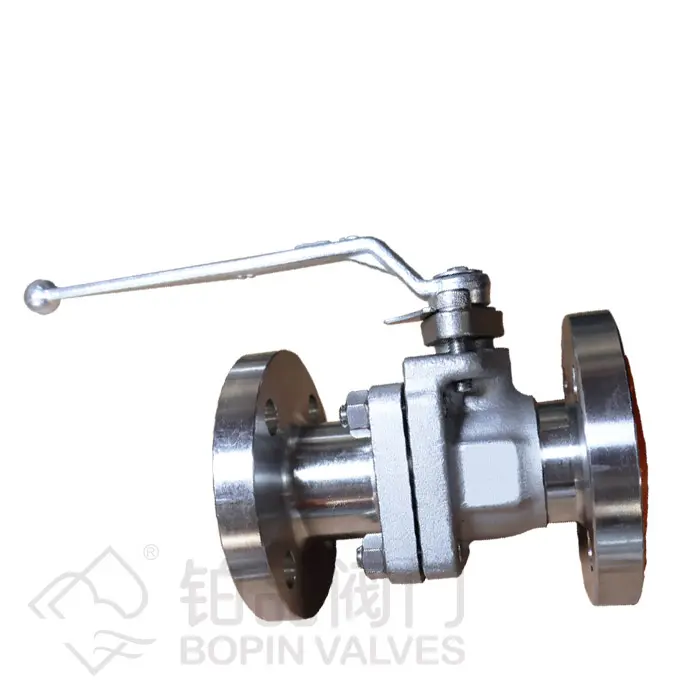
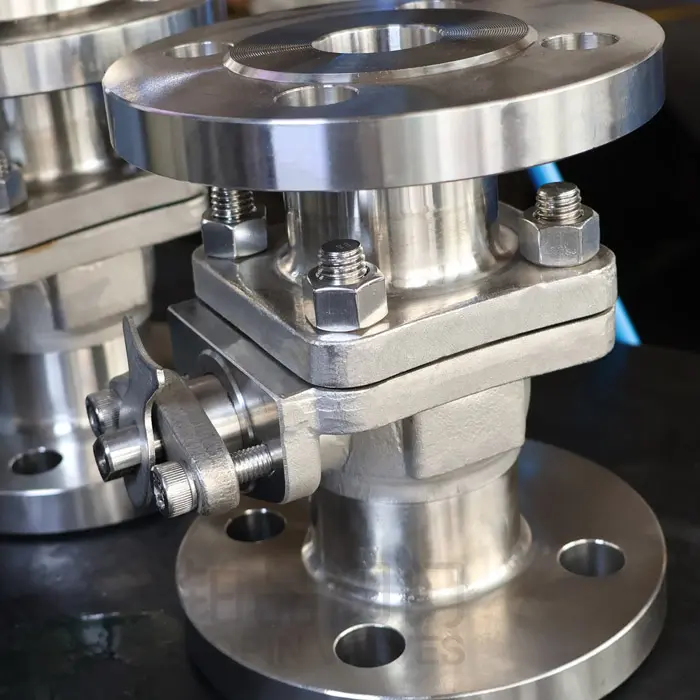
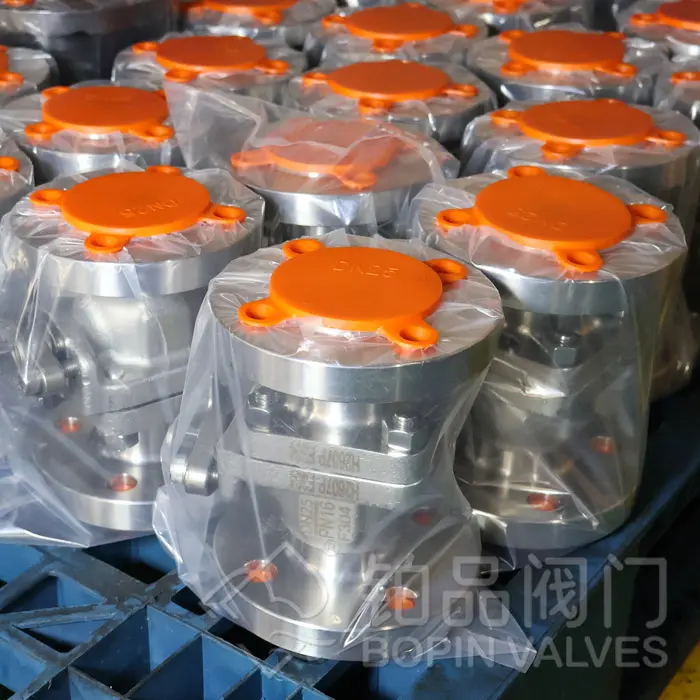
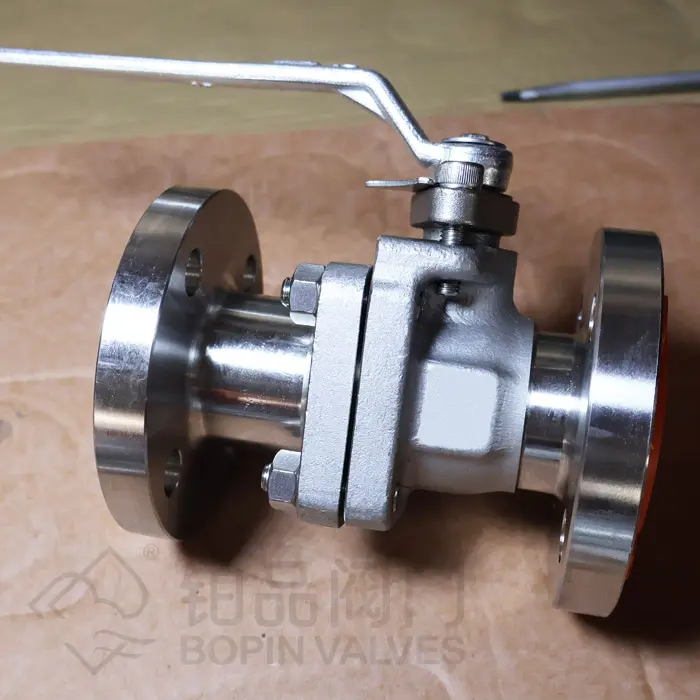
Die Forged Stainless Steel F304 Handle Operated Flange End Floating Type PTFE Sealed Ball Valve
Product Details
1.Die Forged Stainless Steel F304 Body
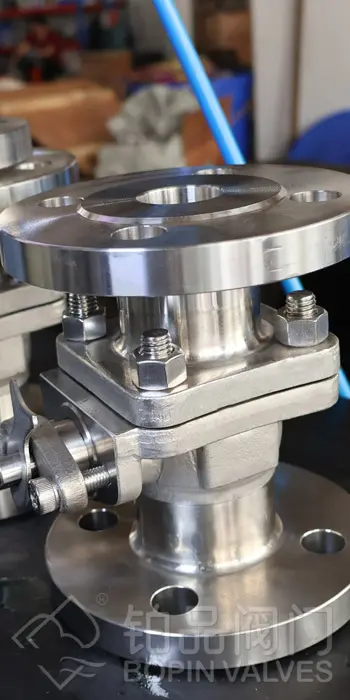 |
One of the major advantages of this ball valve is its die forged stainless steel F304 construction. Compared with conventional cast construction, die forging produces a dense and mechanically robust valve body with excellent structural integrity.
F304 stainless steel, generally corresponding to UNS S30400, offers good resistance to atmospheric corrosion, moisture, many chemicals, and a variety of industrial fluids. It is widely used in chemical processing, water treatment, food processing, pharmaceutical equipment, petrochemical systems, and general industrial piping.
The forged body is particularly suitable for applications where pressure resistance and mechanical reliability are important. The manufacturing process can also provide consistent material properties and a strong pressure-containing structure. |
2.Floating Ball Design
The valve uses a floating ball design, in which the ball is not mechanically fixed to a lower stem or trunnion. Instead, the ball is supported primarily by the valve seats.
When the valve is closed, upstream pressure pushes the ball toward the downstream seat. This action helps the ball maintain close contact with the PTFE seat, improving sealing performance.
The floating design offers several benefits:
Simple internal construction
Effective shut-off performance
Relatively low operating torque
Easy maintenance
Compact flow-control mechanism
Reliable sealing under appropriate pressure conditions
When the handle is rotated 90 degrees, the ball moves between the fully open and fully closed positions. In the fully open position, the ball passage aligns with the pipeline, allowing the medium to flow through the valve with relatively low resistance.
3.PTFE Sealing System
PTFE seats and seals are important components of this ball valve. Polytetrafluoroethylene provides excellent chemical resistance and low friction, making it suitable for many corrosive and non-corrosive media.
The PTFE sealing system creates close contact between the ball and valve seats when the valve is closed. This helps minimize internal leakage and provides dependable shut-off performance.
PTFE is also characterized by:
Excellent chemical resistance
Low friction coefficient
Good sealing capability
Resistance to moisture
Good electrical insulation
Clean and smooth sealing surfaces
However, PTFE has temperature limitations compared with metallic sealing materials. Therefore, the actual operating temperature should be evaluated according to the selected PTFE grade, pressure rating, medium, and service conditions.
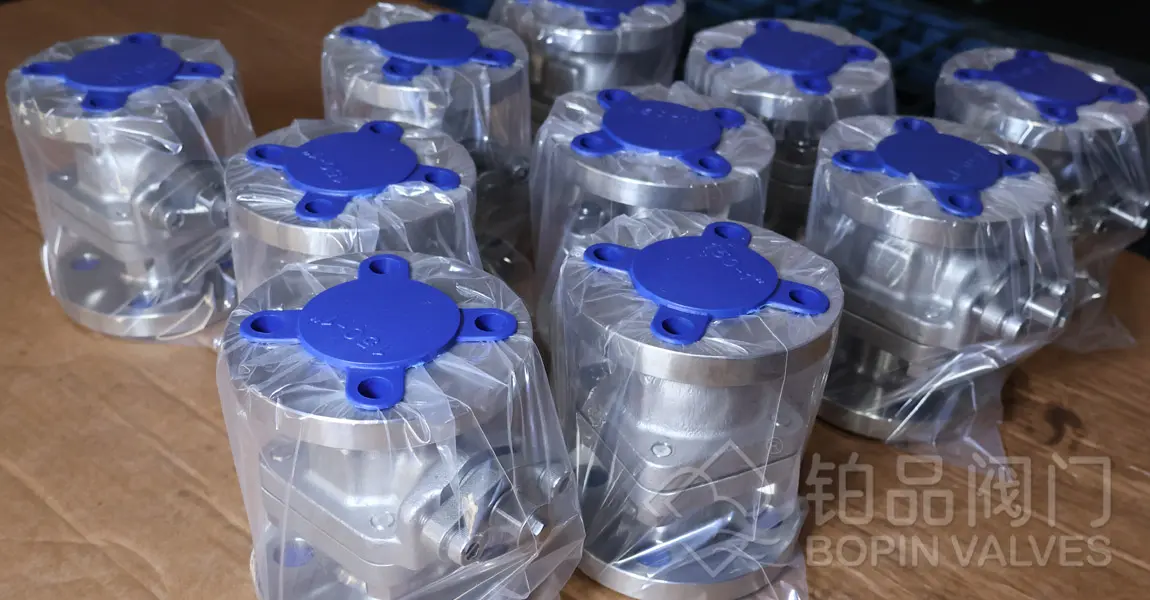
4. Flange End Connection
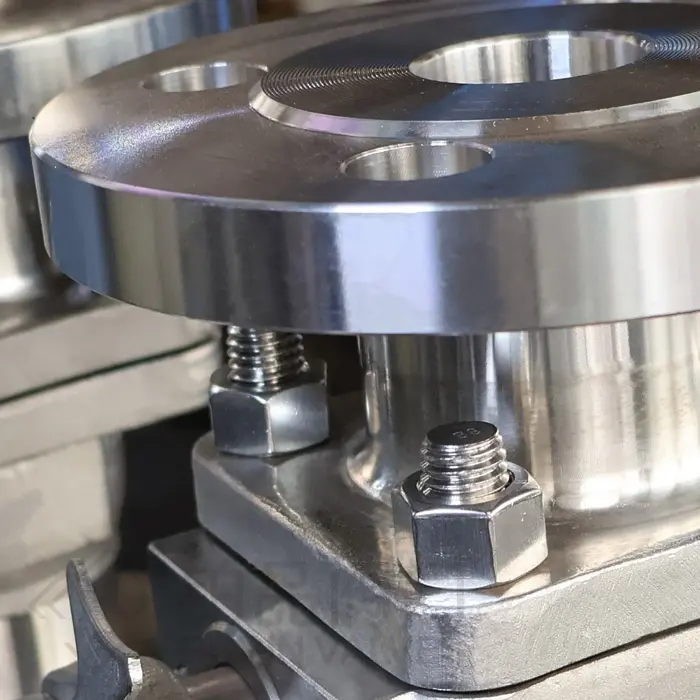
The flange end design makes the valve suitable for installation in industrial piping systems using bolted flange connections. Compared with threaded or socket-welded connections, flanged valves can be removed more conveniently when inspection or maintenance is required.
The flange dimensions, pressure rating, face-to-face dimensions, and drilling configuration can be manufactured according to applicable customer requirements and standards.
Common standards that may be considered for this type of valve include ASME B16.5, ASME B16.34, and relevant international or customer-specific specifications. The actual standard should be confirmed according to the valve design, pressure class, size, and project requirements.
Proper flange alignment and gasket selection are important during installation. Excessive bolt tightening or incorrect alignment should be avoided because these conditions can affect gasket performance and potentially introduce unnecessary stress into the valve and piping system.
5. Handle Operated Design
This valve is operated manually through a lever handle. The quarter-turn operating principle makes the valve easy to use.
A 90-degree rotation normally changes the valve from fully open to fully closed or vice versa. The handle position provides a simple visual indication of the ball position: generally, a handle aligned with the pipeline indicates the open position, while a handle positioned perpendicular to the pipeline indicates the closed position.
Manual handle operation offers several advantages:
Simple structure
No external power source required
Easy field operation
Low maintenance requirements
Quick opening and closing
Convenient visual position indication
For larger sizes or applications requiring lower manual operating effort, a gearbox, pneumatic actuator, electric actuator, or other suitable actuator can be considered instead of the standard handle.
6. Stem and Blowout-Resistant Construction
The valve stem transfers the rotational movement of the handle to the ball. A properly designed stem provides reliable torque transmission and helps maintain consistent operation throughout the service life of the valve.
A blowout-resistant stem design can be incorporated to improve operational safety. In this configuration, the stem is retained inside the valve body so that internal pressure cannot easily force the stem outward during normal service.
Stem sealing components also play an important role in preventing external leakage. Depending on the design and service requirements, PTFE packing or other suitable sealing materials can be selected.
7. Manufacturing Process
The production of a die forged F304 stainless steel ball valve involves several controlled manufacturing stages.
First, suitable F304 stainless steel forging material is selected according to the specified material standard. The material is heated and formed under controlled forging conditions to produce the basic valve body shape.
After forging, the body undergoes machining operations. CNC machining equipment is commonly used to achieve accurate dimensions for the ball cavity, flange surfaces, stem opening, seat locations, and other critical areas.
The ball is machined and finished to provide a smooth sealing surface. The stem and other internal components are manufactured according to specified dimensional and tolerance requirements.
After cleaning, the valve is assembled with PTFE seats, seals, stem components, ball, handle, and other parts. Each valve should then undergo inspection and pressure testing before shipment.
8. Pressure and Leakage Testing
Pressure testing is essential for verifying valve integrity and sealing performance.
The valve body can be subjected to a shell pressure test to verify the pressure-containing capability of the body and pressure boundary. A seat or closure test is then performed to check the sealing performance of the ball and PTFE seats.
Testing procedures may be based on applicable standards such as API 598 or customer specifications. The exact test pressure, duration, allowable leakage, and testing medium should be determined according to the valve pressure class and applicable standard.
Additional inspections may include dimensional inspection, material verification, visual inspection, marking verification, and functional testing.
9.Applications
The combination of forged F304 stainless steel, floating ball construction, PTFE sealing, and flange connections makes this valve suitable for many industrial services.
Typical applications include:
Chemical Industry
F304 stainless steel provides good corrosion resistance for many chemical process fluids. The PTFE seats can also provide compatibility with a wide range of chemical media.
Water Treatment
The valve can be used for water, treated water, and various utility piping systems where stainless steel construction is beneficial.
Food and Beverage
Stainless steel is widely used in hygienic and process-related equipment. Appropriate valve surface finishes and material selections should be specified when sanitary requirements apply.
Pharmaceutical Industry
F304 stainless steel and PTFE components can be used in suitable pharmaceutical process and utility applications, subject to the required cleanliness and regulatory specifications.
Petrochemical Industry
The valve can be applied to many oil, gas, and petrochemical auxiliary systems where the pressure, temperature, and medium are compatible with the valve materials.
General Industrial Piping
It is also suitable for compressed air, water, gas, oil, and other compatible industrial media.
10. Advantages of the Valve
The die forged F304 floating ball valve offers several important advantages.
High mechanical strength: Die forging produces a robust pressure-containing body.
Corrosion resistance: F304 stainless steel provides good resistance to many corrosive environments.
Reliable shut-off: The floating ball and PTFE seats provide effective sealing when properly selected for the application.
Fast operation: The quarter-turn handle allows rapid opening and closing.
Low friction: PTFE seats and the polished ball surface can reduce friction during operation.
Easy maintenance: The flanged design facilitates removal from the pipeline, while the relatively simple floating-ball structure simplifies servicing.
Versatile applications: The valve can be configured for many liquid and gas services.
11. Selection Considerations
Before ordering a die forged F304 flange-end floating ball valve, several parameters should be confirmed.
The required nominal size and pressure class should match the piping system. The operating temperature and pressure must remain within the limits of the selected valve and PTFE sealing material.
The medium should also be clearly identified because chemical compatibility can vary significantly between different fluids. For highly corrosive media, F304 may not always be sufficient, and F316/F316L or special alloys may be more appropriate.
Customers should also specify flange standards, face-to-face dimensions, valve installation orientation, handle requirements, testing standards, marking, painting or surface treatment, and any special inspection requirements.
12. Why Choose BOPIN Die Forged F304 Ball Valves?
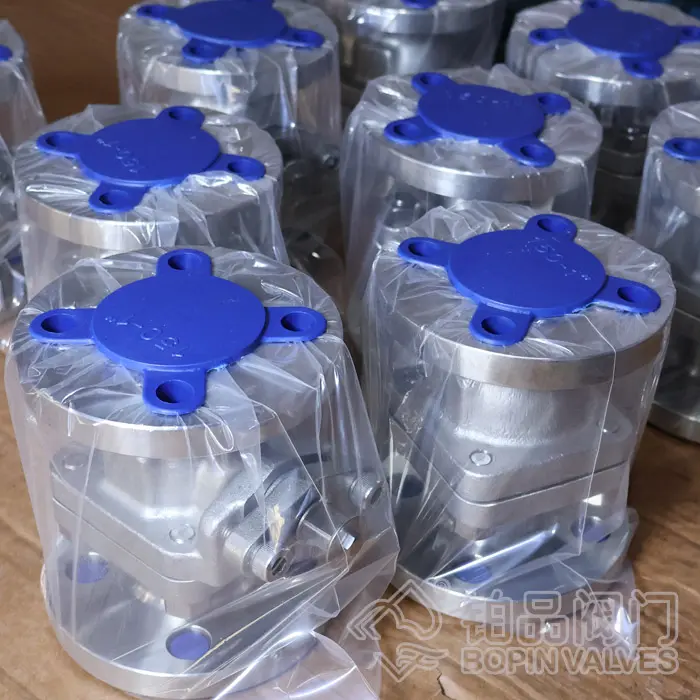
BOPIN can manufacture and supply industrial ball valves according to different international standards and customer specifications. For OEM projects, valve body markings, nameplates, materials, dimensions, connection standards, pressure ratings, sealing materials, and packaging can be customized according to project requirements.
The die forged stainless steel F304 handle operated flange end floating type PTFE sealed ball valve provides a practical combination of mechanical strength, corrosion resistance, reliable shut-off, and easy manual operation. Its forged construction, floating ball mechanism, PTFE sealing system, and flange-end connection make it a dependable choice for industrial isolation applications.
With appropriate material selection, pressure and temperature verification, professional manufacturing, and strict testing, this valve can provide long-term service in a wide range of industrial piping systems.