







DIN Lift Type Check Valve
1. Introduction to DIN Lift Type Check Valve
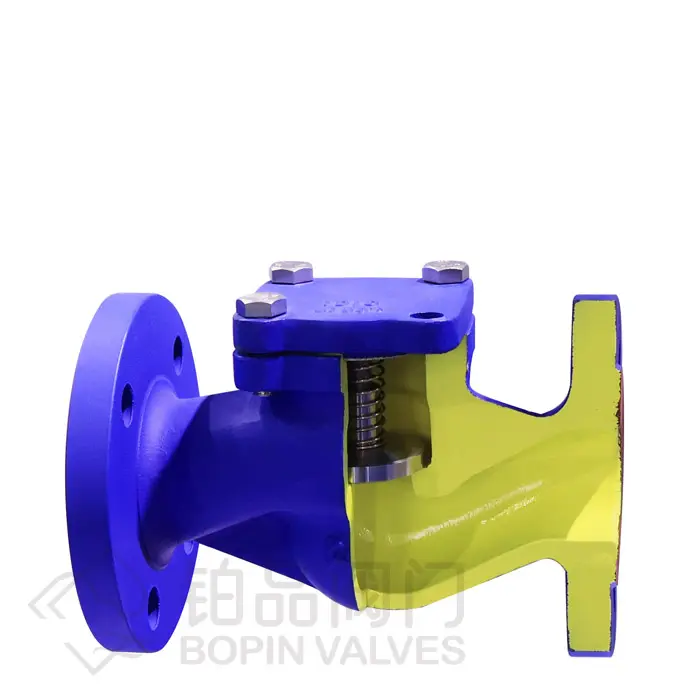
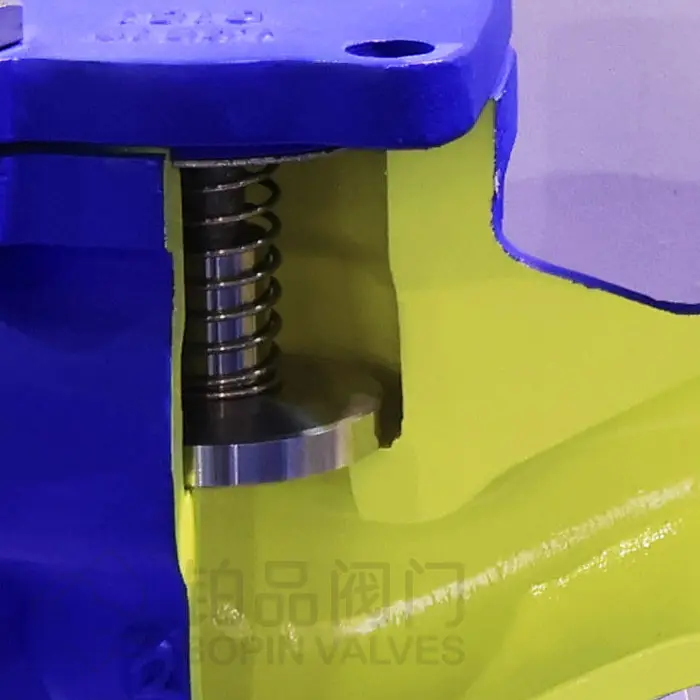
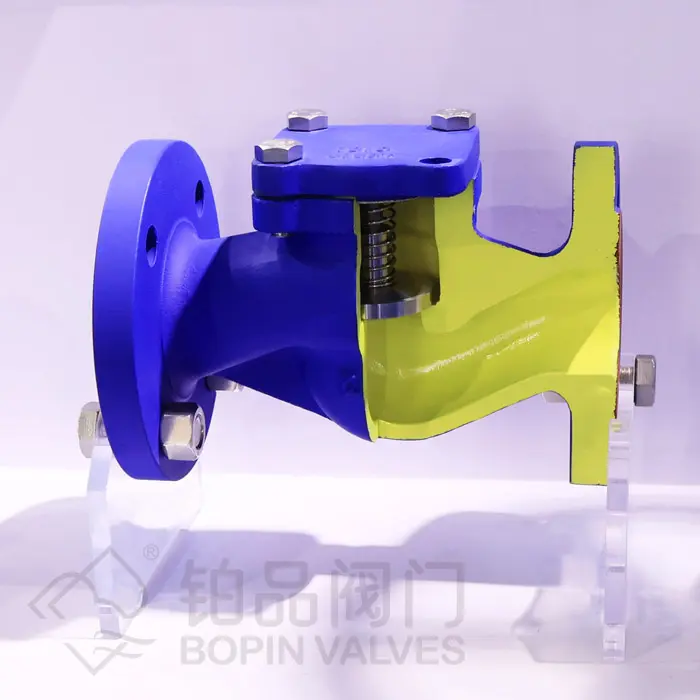
A DIN lift type check valve made of cast steel is a non-return valve designed to allow fluid flow in one direction while automatically preventing reverse flow. It operates through a movable disc (also called a piston or plug) that lifts vertically from the valve seat when upstream pressure exceeds downstream pressure. When flow stops or reverses, the disc returns to the seat by gravity and/or spring force, sealing the passage and preventing backflow.
Manufactured according to DIN standards, these valves are commonly used in industrial piping systems where reliability, pressure resistance, and long service life are required. Cast steel construction provides excellent mechanical strength and is suitable for high-pressure and high-temperature applications such as oil and gas processing, power generation, chemical plants, steam systems, and industrial water networks.
Unlike swing check valves, lift type check valves have a short travel distance and quick response, making them suitable for systems where flow stability and prevention of reverse pressure are important.
2. Main Features of DIN Lift Type Check Valve, Cast Steel
2.1 Vertical Lift Disc Design
The valve disc moves vertically along the valve body guide. This design provides:
- Fast closing response
- Reduced risk of reverse flow
- Compact installation
- Reliable sealing performance
The guided movement minimizes vibration and improves operation under fluctuating flow conditions.
2.2 Cast Steel Valve Body
Cast steel is widely selected because of its:
- High mechanical strength
- Good impact resistance
- Excellent pressure-bearing capability
- Suitability for high-temperature service
Typical body materials include:
- WCB carbon steel
- LCB low-temperature carbon steel
- WC6/WC9 alloy steel
- CF8/CF8M stainless steel
The material selection depends on pressure, temperature, and fluid characteristics.
2.3 DIN Standard Compatibility
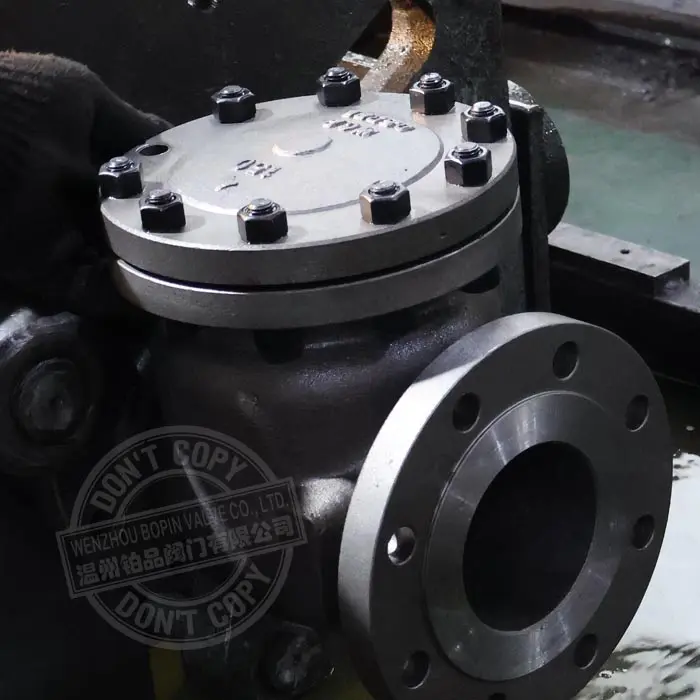
DIN lift type check valves are generally designed according to German industrial standards related to:
- Valve dimensions
- Pressure ratings
- Face-to-face dimensions
- Flange connections
- Testing requirements
They are often installed in systems requiring compatibility with European piping standards.
3. Operating Principle of Lift Type Check Valve
The operation is completely automatic and does not require external control.
Normal Forward Flow
When fluid pressure at the inlet exceeds outlet pressure:
- Pressure pushes the disc upward.
- The flow passage opens.
- Fluid passes through the valve with minimal restriction.
Flow Stop Condition
When the upstream pump stops or flow decreases:
- Differential pressure decreases.
- The disc moves downward.
- The valve closes before significant reverse flow occurs.
Reverse Flow Prevention
If downstream pressure becomes higher than upstream pressure:
- The disc remains seated.
- Backflow is blocked.
- Equipment such as pumps and compressors are protected.
4. Operating Condition Compatibility
Correct application requires checking whether the valve design matches actual operating conditions.
4.1 Pressure Compatibility
The valve pressure rating must exceed the maximum system pressure.
Common pressure classes include:
- PN16
- PN25
- PN40
- PN63
- PN100
- PN160
Selection factors:
- Normal operating pressure
- Maximum allowable pressure
- Pressure surge caused by pump starting/stopping
- Water hammer conditions
A valve operating continuously near its maximum pressure rating may experience reduced service life.
4.2 Temperature Compatibility
Cast steel lift check valves are available for different temperature ranges depending on material and sealing design.
Typical applications:
Carbon Steel
Suitable for:
- Water
- Oil
- Gas
- General industrial fluids
Typical range:
- Approximately -29°C to 425°C
Alloy Steel
Suitable for:
- High-temperature steam
- Thermal systems
- Power plant applications
Stainless Steel
Suitable for:
- Corrosive chemicals
- Food processing fluids
- Marine applications
Always verify:
- Body material temperature limit
- Seat material temperature limit
- Gasket compatibility
4.3 Fluid Compatibility
The valve must match the transported medium.
Water Systems
Suitable for:
- Cooling water
- Boiler feed water
- Industrial water
Recommended features:
- Stainless steel trim
- Corrosion-resistant seats
Steam Systems
Requirements:
- High-temperature materials
- Metal sealing surfaces
- Proper pressure class
Oil and Gas Systems
Consider:
- Fire-safe requirements
- Sulfur resistance
- Low-temperature performance
Chemical Applications
Important factors:
- Chemical corrosion resistance
- Seal material compatibility
- Stress corrosion cracking risk
4.4 Flow Condition Compatibility
Lift check valves perform best in systems with stable flow.
Suitable conditions:
- Continuous flow
- Moderate velocity
- Clean fluids
Less suitable conditions:
- Highly pulsating flow
- Dirty fluids containing solids
- Extremely low flow rates
Low flow may cause unstable disc movement, resulting in vibration or noise.
5. Model Selection Guidelines
Choosing the correct DIN lift type check valve requires evaluation of several parameters.
5.1 Determine Valve Size
Valve size should match the piping system.
Consider:
- Pipe diameter
- Required flow capacity
- Pressure drop allowance
- Installation space
Oversized valves may cause:
- Poor disc opening
- Valve chatter
- Reduced sealing performance
Undersized valves may cause:
- Excessive pressure loss
- High velocity
- Premature wear
5.2 Select Body Material
Material selection depends on operating conditions.
| Application | Recommended Material |
|---|---|
| General water service | Carbon steel WCB |
| Steam service | Alloy steel WC6/WC9 |
| Low-temperature service | LCB |
| Corrosive fluids | Stainless steel CF8M |
| Offshore applications | Stainless steel or special alloys |
5.3 Select Pressure Rating
Choose based on maximum working pressure.
Example:
A system operating at 3.0 MPa should not normally use a valve rated exactly at 3.0 MPa. Additional safety margin should be considered.
Factors include:
- Operating pressure
- Temperature derating
- Pressure fluctuations
- Safety requirements
5.4 Select End Connection Type
Common options:
Flanged Connection
Advantages:
- Easy installation
- Easy maintenance
- Suitable for large sizes
Common standards:
- DIN flange
- EN flange
- ANSI flange
Threaded Connection
Used mainly for:
- Small diameter pipelines
- Low-pressure systems
Welded Connection
Advantages:
- Excellent leakage prevention
- Suitable for high-pressure systems
Applications:
- Power plants
- Petrochemical facilities
5.5 Consider Installation Position
Most lift check valves are installed:
- Horizontally in pipelines
Some designs allow:
- Vertical upward flow installation
Avoid:
- Vertical downward flow installation
because gravity may prevent proper closing.
Always follow manufacturer installation instructions.
5.6 Seat Design Selection
Seat design affects sealing performance.
Metal Seat
Advantages:
- High temperature resistance
- Long service life
- Suitable for steam and high-pressure fluids
Soft Seat
Advantages:
- Better low-pressure sealing
- Reduced leakage
Limitations:
- Lower temperature capability
6. Advantages and Limitations
Advantages
- Automatic operation
- Excellent reverse flow prevention
- Fast closing action
- Suitable for high-pressure systems
- Compact design
- Reliable sealing
Limitations
- Requires relatively clean fluid
- Higher pressure loss than some swing check valves
- Usually requires horizontal installation
- Not ideal for highly pulsating flow
7. Maintenance Guidelines
Although check valves operate automatically, regular inspection improves reliability.
Recommended maintenance activities:
Visual Inspection
Check for:
- External leakage
- Corrosion
- Flange damage
- Abnormal vibration
Internal Inspection
During shutdown:
- Check disc movement
- Inspect seat condition
- Remove deposits
- Verify sealing surfaces
Operating Monitoring
Monitor:
- Pressure drop
- Noise
- Vibration
- Reverse flow symptoms
8. Frequently Asked Questions (FAQ)
Q1: What is the main function of a DIN lift type check valve?
The main function is to allow fluid flow in one direction while automatically preventing reverse flow that could damage pumps, compressors, and other equipment.
Q2: Why use cast steel for lift check valves?
Cast steel provides high strength, durability, and pressure resistance. It is suitable for demanding industrial applications involving high pressure and temperature.
Q3: Can a lift check valve be installed vertically?
Some models allow vertical installation with upward flow. However, installation requirements depend on the valve design. Downward vertical installation is generally unsuitable.
Q4: What fluids are suitable for DIN cast steel lift check valves?
They are commonly used for:
- Water
- Steam
- Oil
- Gas
- Industrial fluids
- Petrochemical media
The material and seal selection must match the specific fluid.
Q5: What causes lift check valve noise or vibration?
Common causes include:
- Low flow velocity
- Incorrect valve size
- Excessive turbulence
- Improper installation
- Disc instability
Correct sizing and proper flow conditions help prevent these problems.
Q6: How is a lift check valve different from a swing check valve?
A lift check valve uses a vertically moving disc, while a swing check valve uses a hinged disc.
Lift check valves provide:
- Faster closing
- Better performance in high-pressure systems
Swing check valves usually provide:
- Lower pressure loss
- Better suitability for larger pipelines
Q7: How do I select the correct DIN lift check valve model?
Selection should consider:
- Valve size
- Pressure rating
- Temperature range
- Fluid characteristics
- Material compatibility
- Connection standard
- Installation position
- Flow conditions
Q8: How long can a cast steel lift check valve last?
Service life depends on:
- Operating conditions
- Material selection
- Maintenance frequency
- Fluid cleanliness
- Installation quality
In properly designed systems, industrial check valves can provide many years of reliable operation.