







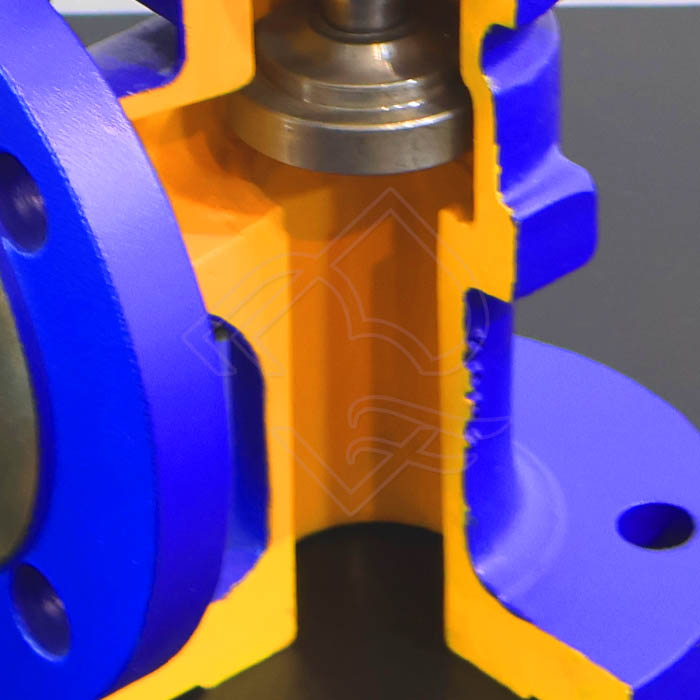
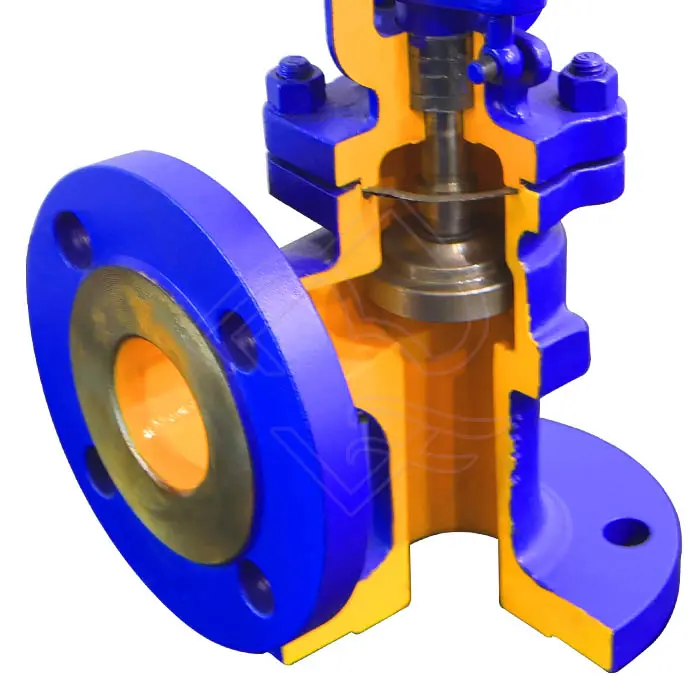
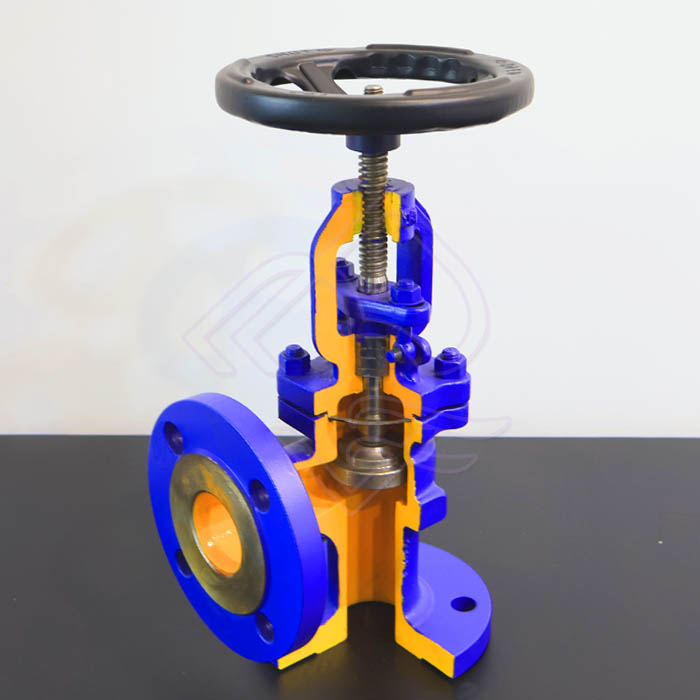
DIN EN 13709 ANGLE TYPE GLOBE VALVE MANUFACTURER
Design and Construction
1.1 Angle Type Body Design
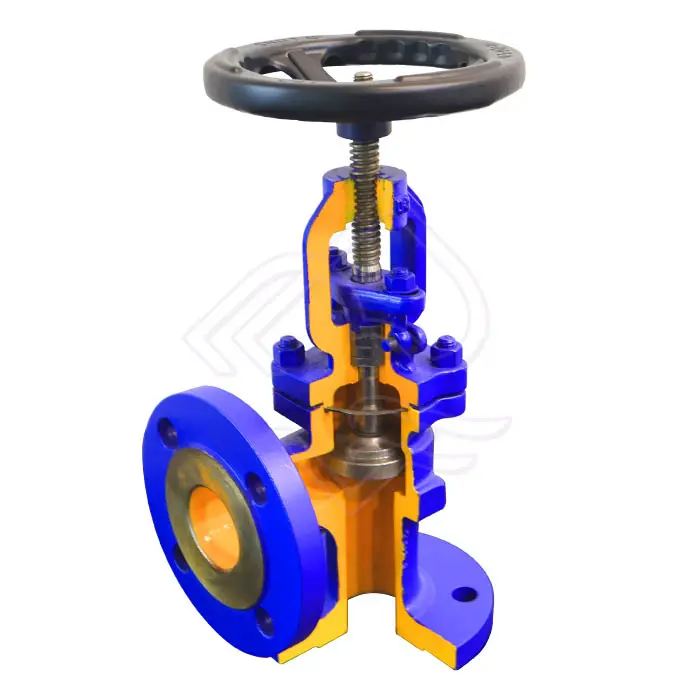
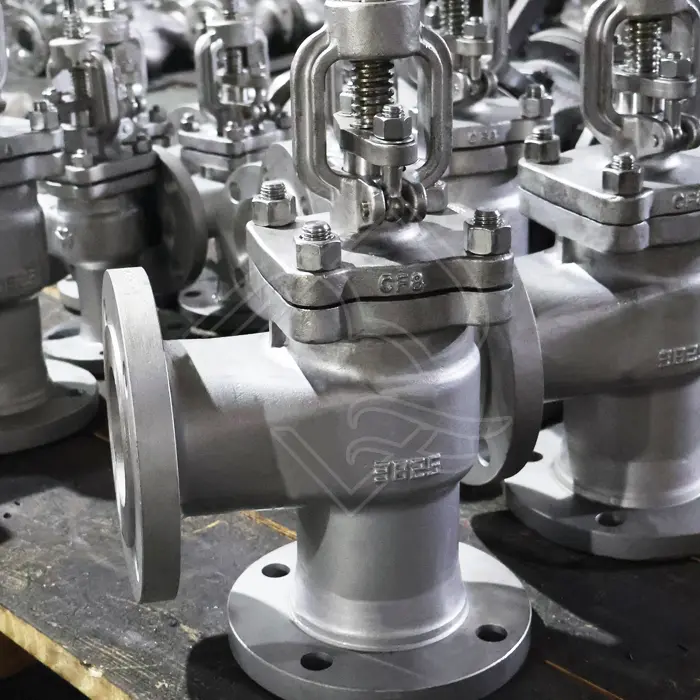
The most distinctive feature of this valve is its angle-pattern body, where the inlet and outlet ports are oriented at 90 degrees. This design:
Changes the direction of flow.
Reduces the need for separate pipe elbows.
Minimizes pressure drop compared to a straight globe valve combined with an elbow.
Improves flow efficiency in certain installations.
The internal flow path allows the fluid to enter the valve, pass through the seat, and exit at a right angle.
1.2 Flange End Connection (DIN Standard)
The valve is equipped with flanged ends manufactured according to DIN standards such as:
DIN EN 1092-1
DIN PN10 / PN16 / PN25 / PN40 (pressure ratings)
Flanged connections provide:
Easy installation and removal.
Reliable sealing with gaskets.
Suitability for high-pressure and high-temperature applications.
These flanges ensure compatibility with European pipeline systems.
1.3 Main Components
A typical DIN flange end angle globe valve without bellows consists of:
Body – Cast or forged steel, stainless steel, or ductile iron.
Bonnet – Bolted or pressure-sealed design.
Disc (Plug) – Controls flow by seating against the valve seat.
Seat Ring – Provides sealing surface.
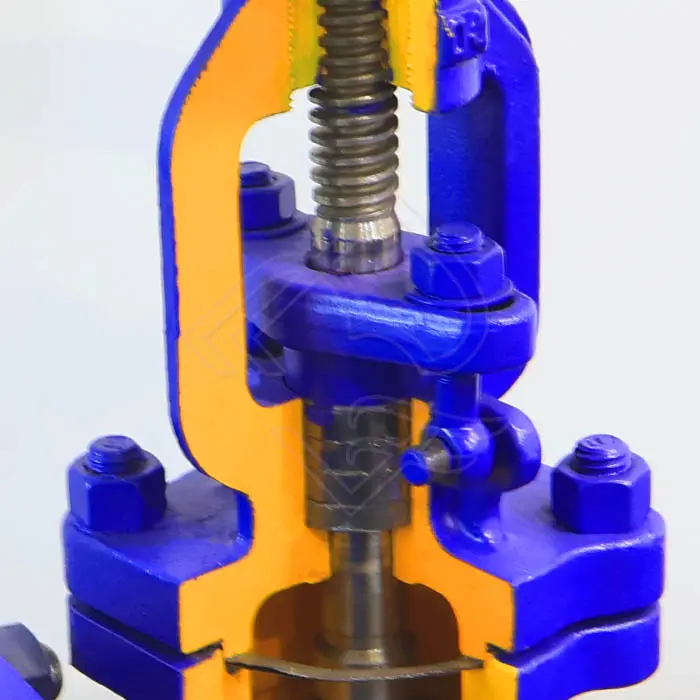
Stem – Transfers motion from actuator/handwheel to disc.
Packing – Seals around the stem to prevent leakage.
Gland and Gland Flange – Compress packing material.
Handwheel or Actuator – Manual or automated operation.
Working Principle
The globe valve operates using a linear motion mechanism.
When the handwheel rotates, the stem moves vertically.
The disc lifts from the seat to allow flow.
Lowering the stem presses the disc against the seat to stop flow.
Intermediate positions allow throttling control.
Because of the perpendicular flow path, the angle type design offers better control characteristics compared to gate valves.

Materials of Construction
Common materials include:
Body Materials
Cast Carbon Steel (e.g., GS-C25)
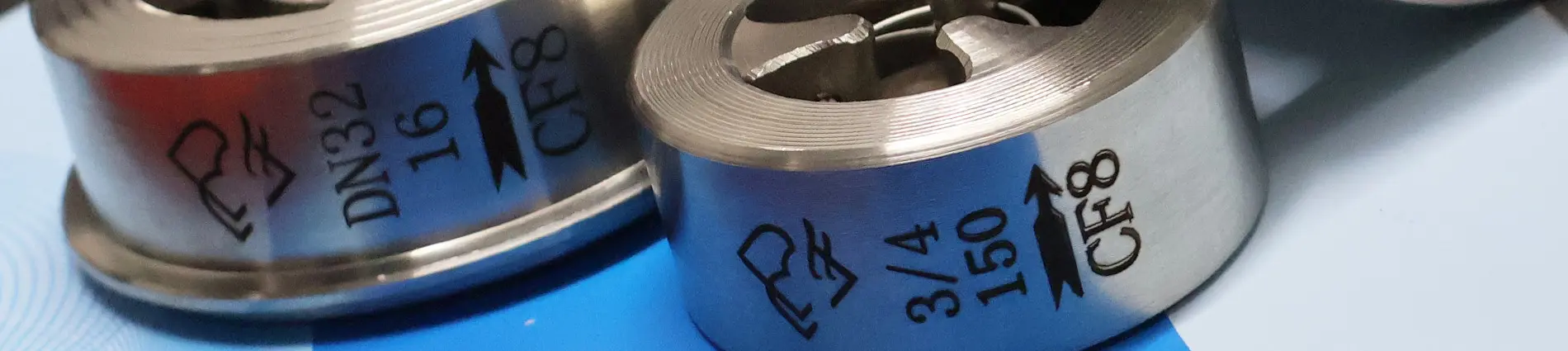
Stainless Steel (e.g., CF8, CF8M)
Ductile Iron
Alloy Steel (for high temperature)
Trim Materials
Stainless Steel
Stellite hard-faced seat/disc
Bronze (for water applications)
Packing Materials
Since this is a non-bellows type valve, stem sealing relies on packing materials such as:
Graphite
PTFE
Aramid fiber
The absence of bellows makes the valve more economical but requires periodic packing maintenance.
Pressure and Temperature Ratings
DIN globe valves are manufactured according to European pressure classifications:
PN10
PN16
PN25
PN40
Typical temperature ranges:
Up to 400°C (carbon steel)
Up to 550°C (alloy steel)
Lower limits depend on material selection
These valves are suitable for:
Steam
Hot oil
Water
Compressed air
Non-corrosive chemicals
Advantages
5.1 Precise Flow Control
Globe valves offer excellent throttling characteristics due to the linear disc movement.
5.2 Compact Installation
The angle pattern eliminates the need for separate elbow fittings.
5.3 Cost-Effective
Without a bellows seal, the valve is:
Less expensive
Simpler in construction
Easier to maintain
5.4 Robust Design
Suitable for demanding industrial environments.
Limitations
6.1 Stem Leakage Risk
Without bellows, the valve depends on packing. Over time:
Packing may wear.
Adjustment or replacement may be required.
Minor fugitive emissions are possible.
6.2 Higher Pressure Drop
Compared to gate valves, globe valves inherently create more pressure loss.
6.3 Not Ideal for Full Bore Flow
Flow resistance is greater due to the internal flow path.
Applications
DIN flange end angle type globe valves without bellows are commonly used in:
7.1 Power Plants
Steam lines
Boiler feed systems
Condensate return systems
7.2 Chemical Industry
Process fluid control
Cooling systems
Non-toxic fluid handling
7.3 Oil & Gas
Utility lines
Instrument air systems
Fuel oil lines
7.4 HVAC Systems
Heating networks
Chilled water systems
7.5 Marine and Shipbuilding
Auxiliary systems
Engine room piping
Comparison: With vs Without Bellows
Feature Without Bellows With Bellows
Cost Lower Higher
Maintenance Requires packing adjustment Minimal
Emission Control Moderate Excellent
Leakage Risk Possible Very Low
Complexity Simple More complex
Bellows-sealed valves are preferred for:
Toxic fluids
Hazardous gases
Vacuum applications
Non-bellows types are preferred for:
General industrial services
Steam and water systems
Budget-conscious projects
Installation Guidelines
Install according to flow direction marking.
Ensure correct gasket selection for DIN flange rating.
Tighten flange bolts in cross pattern.
Provide adequate support to avoid pipeline stress.
Allow space for handwheel operation and maintenance.
For angle valves, ensure the outlet direction aligns properly with downstream piping.
Maintenance Practices
Since this valve does not use a bellows seal, routine maintenance is important:
Inspect packing for leakage.
Tighten gland bolts evenly if leakage occurs.
Replace packing if worn.
Check seat and disc for erosion.
Lubricate stem threads periodically.
Preventive maintenance increases service life and reliability.
Testing and Standards
These valves are typically manufactured and tested according to:
DIN EN 13709 (Globe valves)
EN 12266 (Pressure testing)
ISO 5208 (Valve testing)
DIN EN 1092-1 (Flange dimensions)
Hydrostatic and seat leakage tests are performed before delivery.