







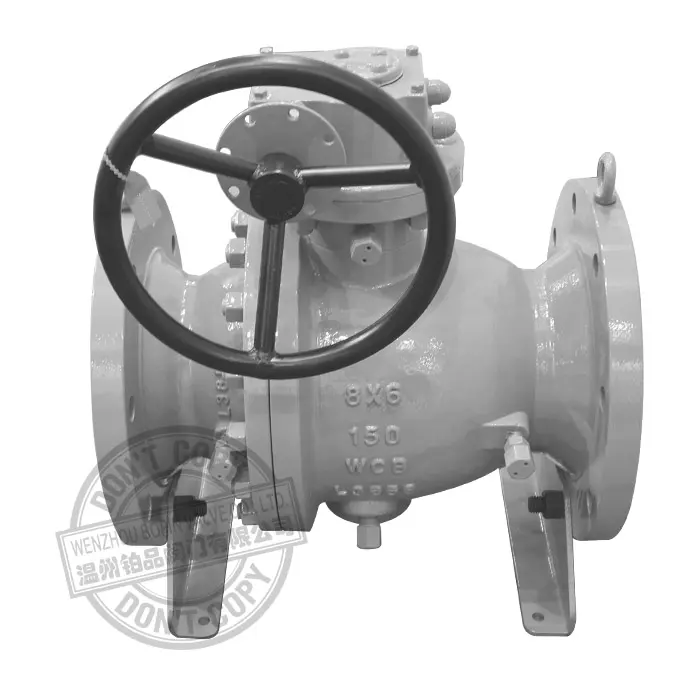
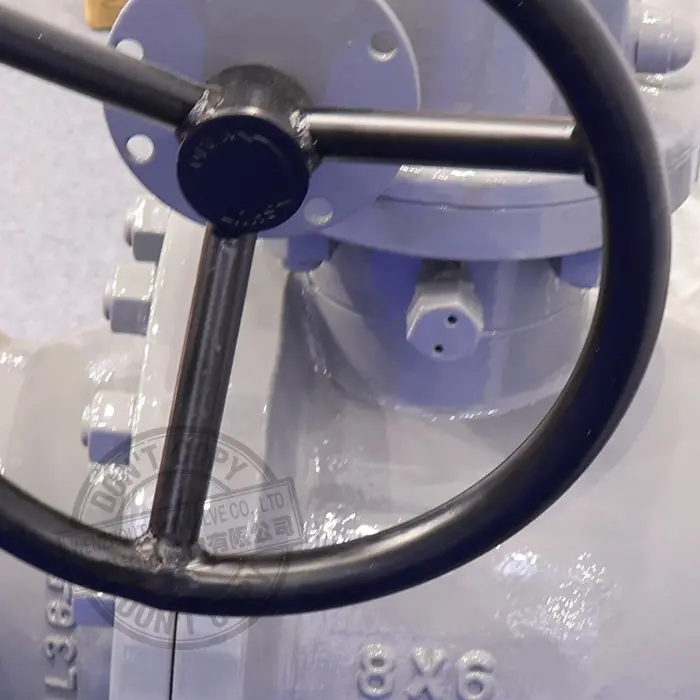
API 6D Cast Steel Reduce Bore Trunnion Mounted Ball Valve
A trunnion mounted ball valve differs from a floating ball valve in that the ball is mechanically anchored by upper and lower trunnions. This design minimizes ball movement under pressure and significantly reduces operating torque, especially in larger sizes and high-pressure applications. The reduced bore configuration features a flow passage smaller than the pipeline diameter, offering a cost-effective solution while maintaining excellent shut-off capabilities.
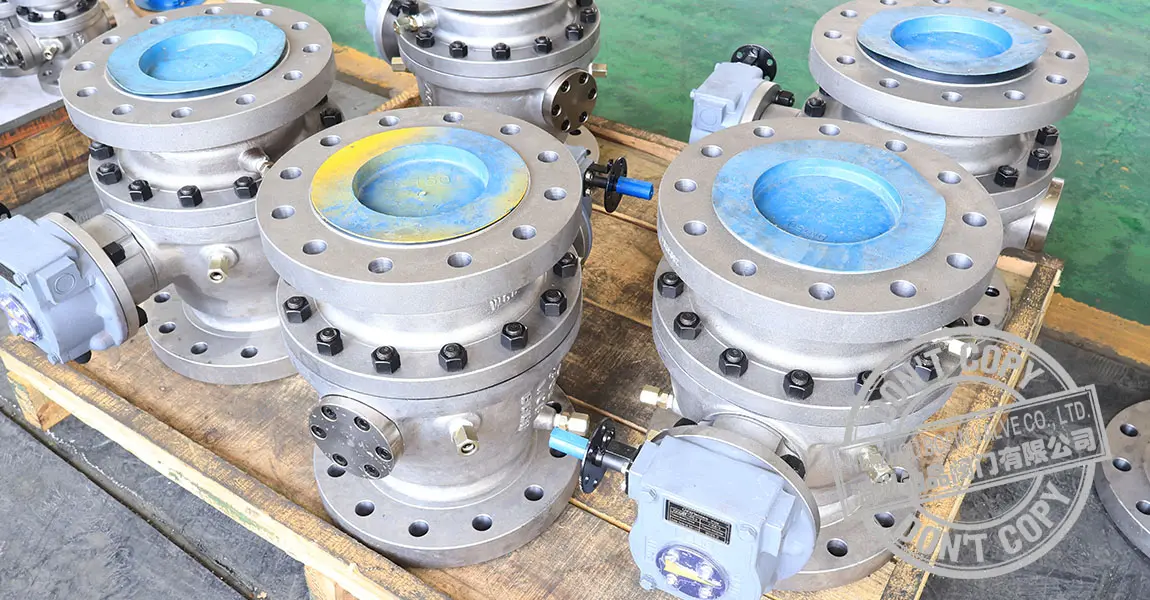
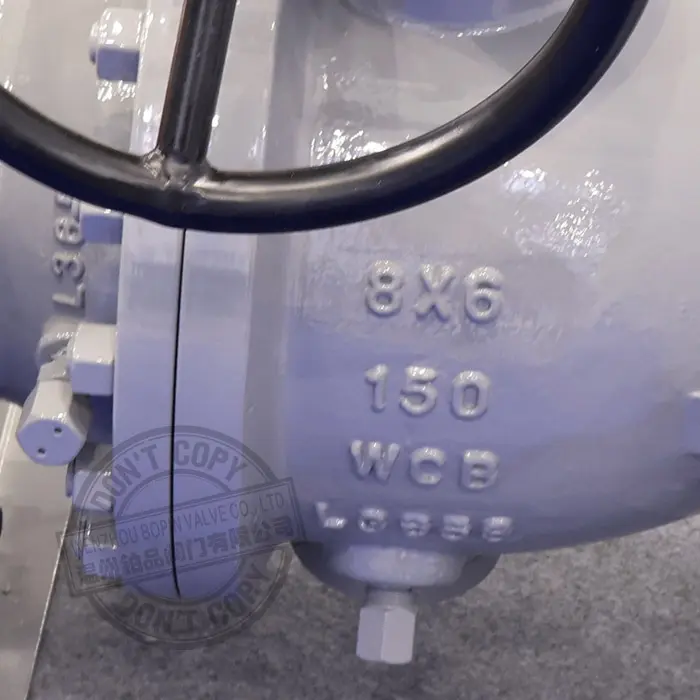
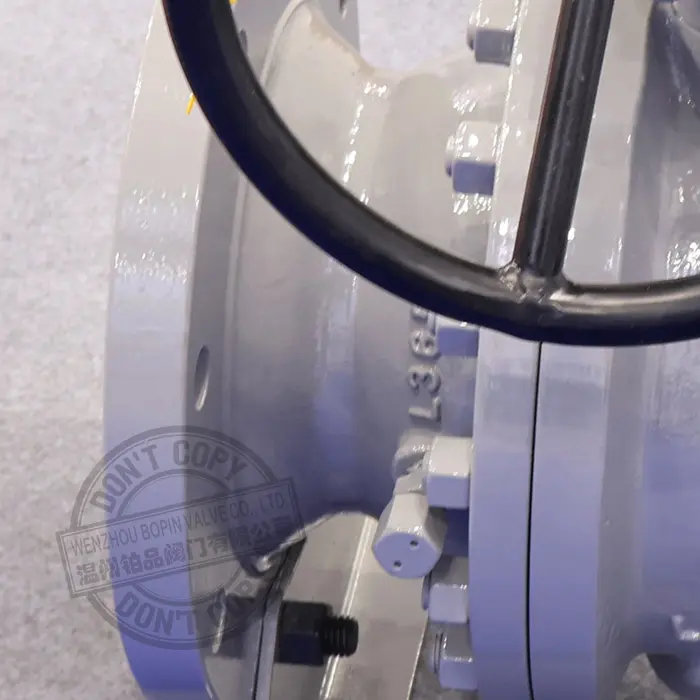
Constructed from ASTM A216 WCB cast carbon steel, the valve body provides excellent mechanical strength, toughness, and pressure-retaining capability. The flanged end design allows easy installation and maintenance while ensuring compatibility with standard pipeline flange systems.
Design Standards
API 6D Trunnion Mounted Ball Valves are manufactured and tested according to internationally recognized standards, including:
- API 6D – Pipeline Valves
- ASME B16.34 – Valves Flanged, Threaded and Welding End
- ASME B16.5 – Pipe Flanges and Flanged Fittings
- ASME B16.10 – Face-to-Face Dimensions
- API 598 – Valve Inspection and Testing
- ISO 5208 – Pressure Testing of Valves
- NACE MR0175 / ISO 15156 – Sour Service Applications
- ISO 17292 – Metal Ball Valves for Petroleum Industries
- Fire Safe Design according to API 607 or API 6FA
These standards ensure the valve meets stringent requirements for safety, performance, and reliability in critical industrial services.
Material Construction
The standard material configuration typically includes:
| Component | Material |
|---|---|
| Body | ASTM A216 WCB |
| Ball | ASTM A105 + ENP / Stainless Steel |
| Stem | ASTM A182 F6a / F304 |
| Seats | PTFE, RPTFE, PEEK, Nylon |
| Trunnion | Stainless Steel |
| Gasket | Graphite + Stainless Steel |
| Bolting | ASTM A193 B7 / ASTM A194 2H |
ASTM A216 WCB carbon steel is widely selected for its excellent weldability, strength, and cost-effectiveness in medium and high-pressure applications.
Trunnion Mounted Ball Design
The trunnion mounted ball structure is one of the most important features of this valve. The ball is supported by bearings and trunnions at both the top and bottom, allowing it to rotate smoothly while remaining fixed in position.
Advantages include:
- Reduced operating torque
- Lower seat wear
- Improved sealing under high differential pressure
- Longer service life
- Suitability for large-diameter pipelines
- Enhanced operational stability
Because the ball remains stationary while the seats move against it, sealing performance remains consistent even after years of operation.
Reduced Bore Design
A reduced bore ball valve has a port diameter smaller than the pipeline internal diameter.
Key benefits include:
Cost Savings
The smaller ball and seat assembly require less material, reducing manufacturing costs and overall project expenses.
Reduced Weight
Compared to full bore designs, reduced bore valves are lighter, making transportation, installation, and maintenance easier.
Compact Construction
The reduced bore structure allows a more compact valve design while maintaining high-pressure capabilities.
Suitable for General Isolation
For applications where pigging is not required, reduced bore valves provide an economical and efficient solution.
Although some pressure drop may occur due to the smaller flow passage, it is generally negligible in many industrial processes.
Double Block and Bleed Capability
Many API 6D trunnion mounted ball valves feature Double Block and Bleed (DBB) functionality.
This design allows:
- Simultaneous sealing from upstream and downstream seats
- Isolation of process media
- Verification of seat integrity
- Safe cavity pressure release
DBB capability is particularly valuable in oil and gas operations where maintenance and safety are critical concerns.
Fire Safe Design
Industrial facilities handling hydrocarbons require valves capable of maintaining sealing performance during fire conditions.
The fire-safe design incorporates:
- Metal-to-metal secondary sealing
- Graphite stem packing
- Fire-resistant gaskets
- Certified fire testing
In the event of seat damage caused by extreme heat, the metal sealing surfaces continue providing emergency shut-off capability, reducing the risk of leakage and environmental hazards.
Anti-Static Device
During valve operation, friction between internal components may generate static electricity.
To eliminate static charge accumulation, the valve includes:
- Ball-to-stem grounding system
- Stem-to-body grounding mechanism
This anti-static design protects personnel, equipment, and facilities from ignition risks in flammable service environments.
Blowout Proof Stem
Safety is enhanced through a blowout-proof stem design.
The stem is internally mounted and retained by a shoulder within the valve body. Even under abnormal pressure conditions, the stem cannot be ejected from the valve.
Benefits include:
- Increased operator safety
- Enhanced pressure containment
- Compliance with international safety standards
- Reliable long-term operation
Low Operating Torque
One major advantage of trunnion mounted ball valves is their exceptionally low operating torque.
Factors contributing to this include:
- Trunnion-supported ball
- Precision-machined bearings
- Optimized seat loading
- Reduced friction during operation
Low torque allows easy operation using:
- Lever handles
- Gear operators
- Pneumatic actuators
- Electric actuators
- Hydraulic actuators
This flexibility makes the valve suitable for both manual and automated systems.
Sealing Performance
The API 6D Trunnion Mounted Ball Valve is designed to achieve bubble-tight shut-off.
Advanced seat designs provide:
- Bidirectional sealing
- Low-pressure sealing
- High-pressure sealing
- Reliable performance under fluctuating conditions
Soft seat materials such as PTFE and reinforced PTFE offer excellent sealing capabilities, while metal-seated options are available for abrasive and high-temperature services.
Application Industries
Oil and Gas Pipelines
Used for transmission and distribution pipelines carrying crude oil, natural gas, and refined products.
Refineries
Installed in process units handling hydrocarbons, fuels, and chemical feedstocks.
Petrochemical Plants
Suitable for controlling aggressive process media under high pressure and temperature.
Power Generation
Applied in steam, cooling water, fuel oil, and auxiliary systems.
Chemical Processing
Provides reliable shut-off for a wide variety of chemical fluids and gases.
Offshore Platforms
The robust design withstands demanding offshore operating environments and corrosive conditions.
Inspection and Testing
Every API 6D Cast Steel Trunnion Mounted Ball Valve undergoes rigorous testing procedures, including:
- Shell pressure test
- High-pressure seat test
- Low-pressure air seat test
- Stem sealing test
- Operational torque test
- Dimensional inspection
- Material verification
- Visual inspection
Optional testing may include:
- Fire safe testing
- Fugitive emission testing
- NACE compliance verification
- Positive Material Identification (PMI)
- Non-Destructive Examination (NDE)
These inspections ensure compliance with project specifications and international standards.
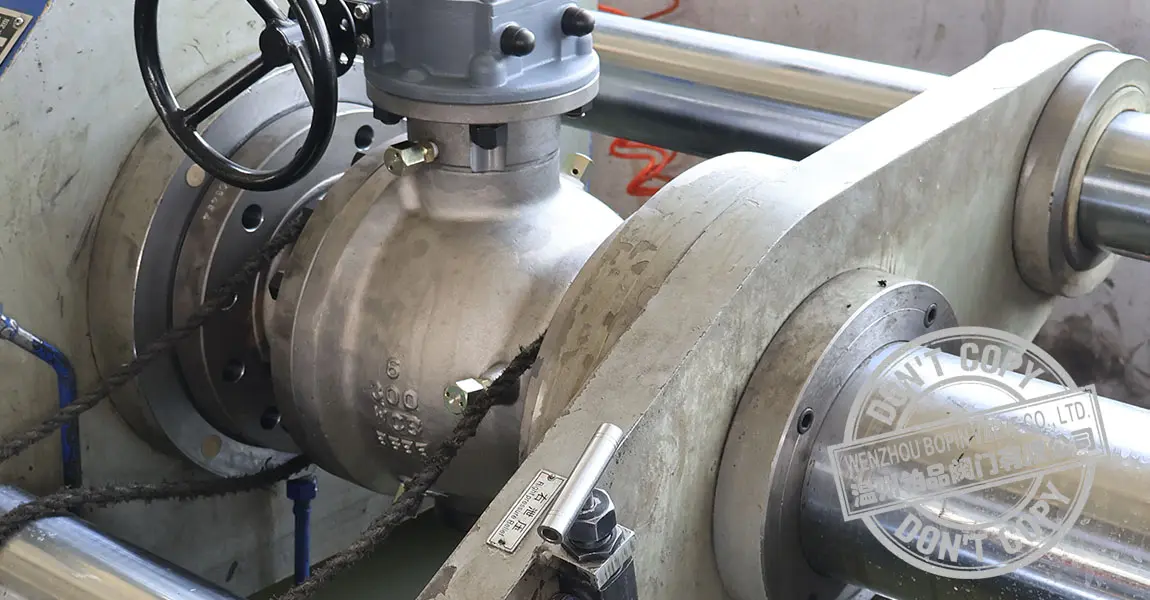
Advantages of API 6D ASTM A216 WCB Reduced Bore Trunnion Mounted Ball Valve
- API 6D compliant design
- Strong ASTM A216 WCB cast steel body
- Reduced operating torque
- Reliable bubble-tight sealing
- Double block and bleed capability
- Fire-safe construction
- Anti-static protection
- Blowout-proof stem design
- Long service life
- Easy automation compatibility
- Reduced maintenance requirements
- Economical reduced bore configuration