





Why Choose Butt-Welded End Valves for Your Piping System?
Butt-welded end valves are an excellent choice for piping systems requiring strong connections, reduced external leakage risk, compact installation, and dependable operation under demanding conditions. Gate, globe, check, ball, and Butterfly Valves can all be supplied with welded-end configurations when the design and application are appropriate.
The most important point is that valve selection and welding installation must be considered together. Correct material selection, pressure-temperature rating, welding-end dimensions, qualified welding procedures, heat control, inspection, and pressure testing all contribute to a reliable finished piping system.
For industrial projects, BOPIN Valve can provide butt-welded valve solutions in carbon steel, stainless steel, alloy steel, duplex stainless steel, and other materials according to application requirements, applicable standards, pressure classes, temperatures, and customer specifications.
What Are Butt-Welded End Valves?
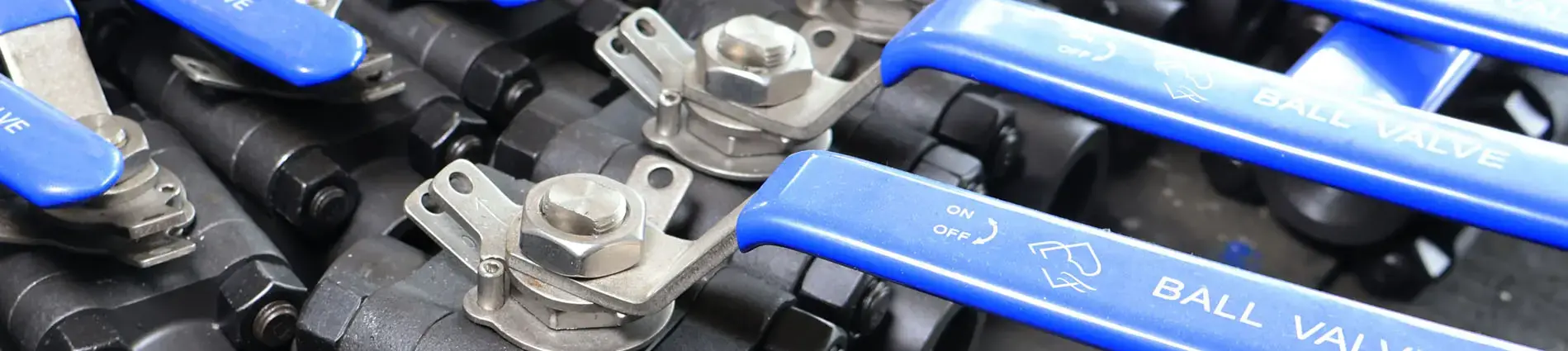
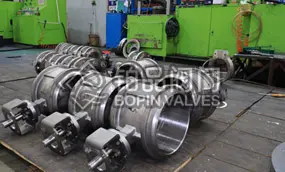
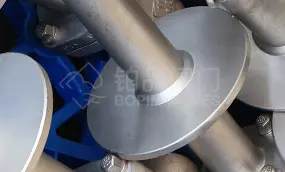
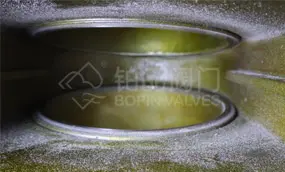
| A butt-welded end valve is designed with welding ends that match the outside diameter and wall thickness requirements of the connecting pipe. The valve is positioned in the pipeline, aligned with the pipe, and joined using an appropriate welding procedure. Because there is no flange, gasket, and large bolting assembly at the connection, the finished installation is relatively compact. The welded connection also reduces the number of potential external leakage points. Common butt-welded end configurations include BW gate valves, globe valves, check valves, ball valves, and butterfly valves designed specifically for welded pipeline connections. | 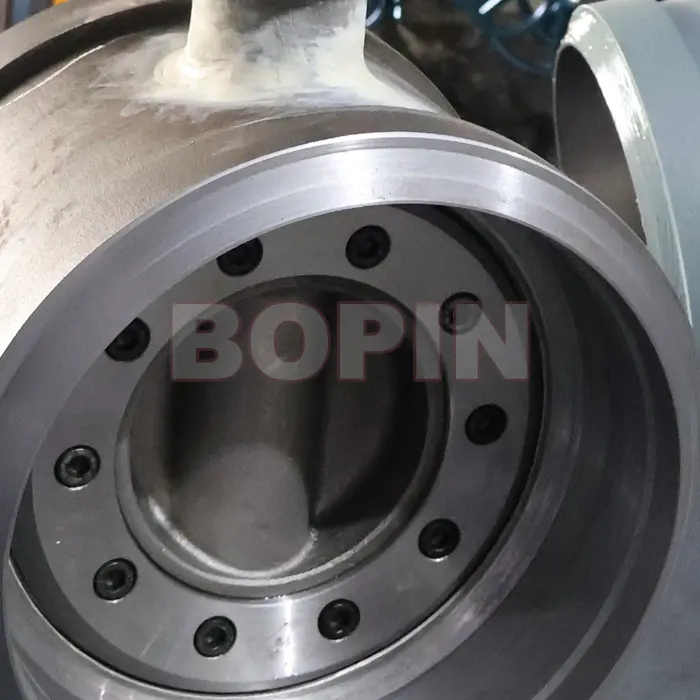 |
Main Types of Butt-Welded End Valves
1. Butt-Welded Gate Valves
Butt-welded gate valves are primarily used for isolation rather than throttling. When fully open, the gate is removed from the main flow path, providing relatively low pressure loss.
They are commonly selected for:
- Oil and gas pipelines
- Steam systems
- Refineries
- Petrochemical plants
- Power stations
- High-pressure process pipelines
Forged steel and Cast Steel Gate Valves are both available depending on size, pressure class, temperature, and material requirements.
2. Butt-Welded Globe Valves
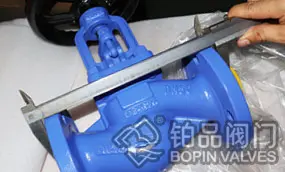
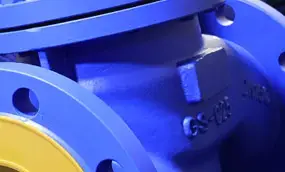
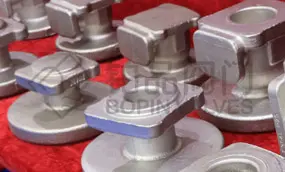
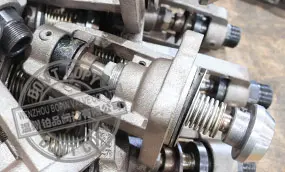
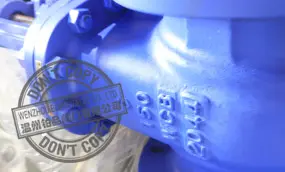
| The globe valve's internal disc-and-seat design provides precise throttling and dependable shutoff. It is particularly suitable for steam, oil, gas, petrochemical, chemical, and high-pressure process applications. The welded connection helps minimize external leakage and provides excellent resistance to vibration and thermal cycling when properly installed. During installation, the pipe and valve ends should be correctly aligned and welded using a qualified welding procedure. Welding heat must be carefully controlled to protect seats, seals, packing, and other internal components. With robust forged construction, compact dimensions, and reliable sealing performance, butt-welded end Forged Steel Globe Valves are an ideal choice for critical industrial piping systems. | 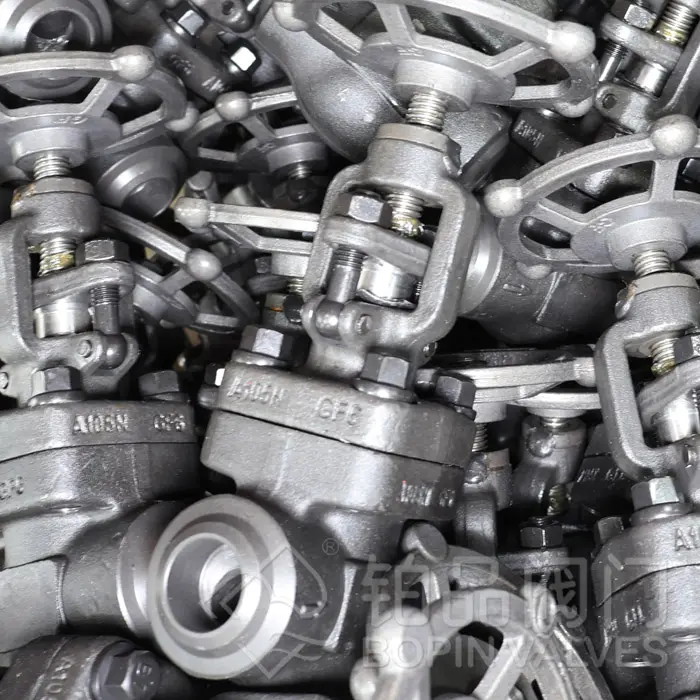 |
3. Butt-Welded Check Valves
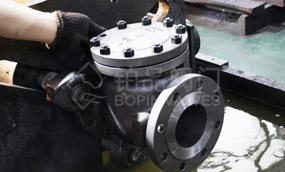
Butt-welded check valves automatically prevent reverse flow. Common designs include swing check, piston check, lift check, and axial-flow check valves.
Their welded connections are particularly useful in systems where minimizing external leakage and maintaining pipeline integrity are important.
4. Butt-Welded Ball Valves
Butt-welded ball valves provide fast quarter-turn operation and reliable shutoff. Full-bore designs can minimize pressure loss, while reduced-bore designs can offer a more compact and economical solution.
They are frequently used in natural gas, oil, chemical, and process applications.
5. Butt-Welded Butterfly Valves
For larger pipelines, API 609 Cast Steel A216 WCB Butt-Welding End Multi-Level Sealing Triple Offset Butterfly Valve can provide a lightweight alternative to some conventional valve arrangements. Triple-offset butterfly valves are particularly suitable for high-temperature and high-cycle applications because their geometry minimizes rubbing between the sealing surfaces during operation.
Key Features of Butt-Welded End Valves
The principal reason for selecting butt-welded valves is the strength and integrity of the welded pipeline connection.
Excellent Leak Resistance
A properly executed butt weld eliminates the conventional flange gasket as an external leakage path. This can be particularly valuable when handling hazardous, toxic, flammable, or high-pressure media.
High Mechanical Strength
The welded connection can withstand substantial pressure, vibration, thermal cycling, and mechanical loads when the valve and welding procedure are correctly selected.
Compact Installation
Without large flanges and bolts, the valve connection requires less radial space. This can be advantageous in densely arranged process plants and piping systems.
Reduced Maintenance at the Connection
A welded joint does not require routine bolt tightening or gasket replacement. However, the valve itself still requires inspection and maintenance according to the service conditions and maintenance program.
Suitable for Severe Service
Butt-welded valves are often selected for high-pressure and high-temperature services where connection integrity is critical.
Valve Material Requirements
Material selection is one of the most important considerations when purchasing butt-welded end valves. The valve body, trim, stem, seat, bonnet, welding ends, and other pressure-containing components must be compatible with the pipeline and process conditions.
Carbon Steel
Carbon steel, such as ASTM A216 WCB for cast components or suitable forged carbon-steel grades, is widely used for general industrial applications, oil and gas, water, steam, and hydrocarbon services.
Stainless Steel
Stainless steels such as ASTM A351 CF8 and CF8M, together with corresponding forged stainless-steel grades, are commonly selected where corrosion resistance is important.
CF8M is particularly useful in many chloride-containing and chemically aggressive environments, although the actual media composition must always be evaluated.
Alloy Steel
Low-alloy steels may be required for elevated-temperature and high-pressure applications. Materials containing chromium and molybdenum are commonly used in demanding steam and power-generation services.
Duplex Stainless Steel
Duplex stainless steels can provide high mechanical strength together with good resistance to corrosion and stress-corrosion-related environments. They are often considered for demanding oil, gas, chemical, and marine applications.
Nickel Alloys
Nickel-based alloys may be selected for highly corrosive, high-temperature, or specialized chemical services. The exact alloy should be determined from the process chemistry, temperature, pressure, and corrosion data.
Working Temperature Requirements
There is no single working temperature applicable to every butt-welded valve. The allowable temperature depends on the valve material, pressure rating, trim, seat material, design, and applicable pressure-temperature tables.
Typical service categories include:
- Low-temperature service: specialized carbon steel, stainless steel, or nickel-alloy materials may be required.
- Normal industrial temperature: carbon steel and stainless steel are widely used depending on the medium.
- High-temperature steam service: alloy steels and suitable high-temperature trims may be required.
- Cryogenic service: special low-temperature materials, extended bonnets, appropriate seals, and controlled manufacturing procedures may be necessary.
Metal-seated valves are generally preferred for higher-temperature applications where soft-seat materials cannot withstand the service temperature.
When selecting a valve, the purchaser should provide the minimum and maximum operating temperatures, design temperature, design pressure, fluid composition, flow conditions, and required pressure class. Valve pressure-temperature ratings should always be verified against the applicable standard and manufacturer's certified data.
How to Weld Butt-Welded Valves into Your Piping System
Correct welding is essential because an excellent valve can still fail if the pipeline connection is improperly installed.
Step 1: Check the Valve and Pipe
Before welding, verify:
- Valve size and pressure class
- Valve material
- Pipe material and wall thickness
- Welding-end dimensions
- Flow direction, if applicable
- Valve cleanliness
- Correct installation orientation
The valve welding ends and pipe should be free from oil, moisture, rust, paint, scale, and other contaminants.
Step 2: Inspect the Welding Ends
Check the bevel geometry, outside diameter, wall thickness, and surface condition. The valve welding end should match the applicable piping and welding requirements.
Do not force the pipe into position to compensate for significant dimensional misalignment.
Step 3: Align the Valve with the Pipe
Position the valve carefully and support it adequately. Correct alignment helps prevent excessive stresses from being transferred to the valve body.
For valves with a defined flow direction, install the valve according to the arrow or manufacturer's instructions.
Step 4: Apply the Approved Welding Procedure
Welding should be performed by qualified personnel using a qualified welding procedure appropriate for the specific materials.
The welding process may include TIG/GTAW, SMAW, GMAW, or other qualified processes depending on pipe size, material, wall thickness, project specifications, and applicable codes.
For alloy and stainless-steel materials, appropriate control of heat input, interpass temperature, shielding gas, filler metal, and preheating/post-weld heat treatment may be required.
Step 5: Protect the Valve During Welding
The valve should be protected from excessive heat. High temperatures can damage seats, seals, packing, coatings, or other internal components.
Follow the valve manufacturer's installation instructions regarding welding position, allowable temperatures, valve orientation, and whether the valve should be open or closed during welding.
For certain valve designs, welding with the valve partially open can help protect internal components, but this is not universal. The manufacturer's instructions and project welding procedure should take precedence.
Step 6: Inspect the Weld
After welding, inspect the joint according to the project specification and applicable code. Depending on service criticality, inspection may include visual examination, radiographic testing, ultrasonic testing, magnetic-particle testing, or liquid-penetrant testing.
Step 7: Perform Pressure Testing
After installation and appropriate examination, the completed piping system should be pressure-tested according to the applicable piping code, project specification, and valve testing requirements.
The valve should be operated carefully after testing to confirm smooth movement and proper shutoff performance.
Why Choose Butt-Welded End Valves?
For critical industrial piping systems, butt-welded valves offer several important advantages:
1. Strong connection: The welded joint provides high mechanical integrity.
2. Reduced external leakage risk: There is no flange gasket at the valve-to-pipe connection.
3. Compact design: Eliminating flanges saves space and can reduce overall installation dimensions.
4. Good performance under vibration: Properly designed and welded connections can perform reliably under demanding operating conditions.
5. Suitable for high pressure: Butt-welded connections are widely used in high-pressure process and energy systems.
6. Excellent long-term integrity: A properly executed welded connection can provide reliable service for many years.
7. Lower connection maintenance: There are no flange bolts to retighten or connection gaskets to replace.
Applications of Butt-Welded End Valves
Butt-welded valves are used across many industries, including:
- Oil and gas transportation
- Refineries
- Petrochemical plants
- Chemical processing
- Thermal power plants
- Steam pipelines
- Boiler systems
- LNG and energy facilities
- Industrial gas systems
- High-pressure process piping
- Offshore and marine facilities
They are especially valuable where pipeline integrity, compact construction, and resistance to external leakage are priorities.
How to Select the Right Butt-Welded Valve
Before issuing an RFQ, provide the valve manufacturer with complete operating information. Important specifications include valve type, nominal size, pressure class, pipe outside diameter, pipe wall thickness, end-to-end dimensions, body material, trim material, seat material, operating temperature, operating pressure, design pressure, medium, flow direction, actuator requirements, testing standard, coating requirements, and applicable design standard.
For example, an RFQ may specify an API 600 cast steel A216 WCB butt-welded gate valve, an API 623 butt-welded globe valve, an API 594 butt-welded check valve, or an Butt-welded End Triple Offset Butterfly Valve, depending on the application.