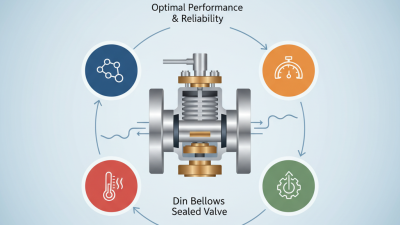

Inquiry
Form loading...

2026 Top API Bellows Sealed Gate Valves for Global Buyers?

Choosing the right Api Bellows Sealed Gate Valves takes more than comparing prices or catalogue photos. Global buyers must match pressure, temperature, process media, connection type, and operating frequency to the actual service. A valve suited to a clean utility line may not suit a hot, corrosive process. Small details matter: alloy selection, bellows weld quality, stem finish, and accessible inspection records.

For this guide, composite valve specialist Martin Hale expresses a practical selection principle: “A sealed valve earns trust through sound design, careful inspection, and evidence you can verify.” This is an illustrative statement, not a quotation from a documented individual. Buyers should confirm the applicable API specification and project requirements directly with the manufacturer. Ask for material traceability, pressure-test records, inspection plans, and clear information about bellows-cycle testing. Paperwork matters. So does what it proves.

The 2026 comparison focuses on manufacturers and models that global buyers can assess against consistent criteria, rather than declaring one universal winner. It considers sealing design, materials, testing transparency, configuration options, lead times, and after-sales support. Country of origin alone cannot establish quality. Neither can a polished brochure. Request drawings and records before approval, and check whether the offered configuration matches the purchase specification. Some comparisons remain imperfect because public data varies between suppliers. That limitation deserves attention, not concealment.
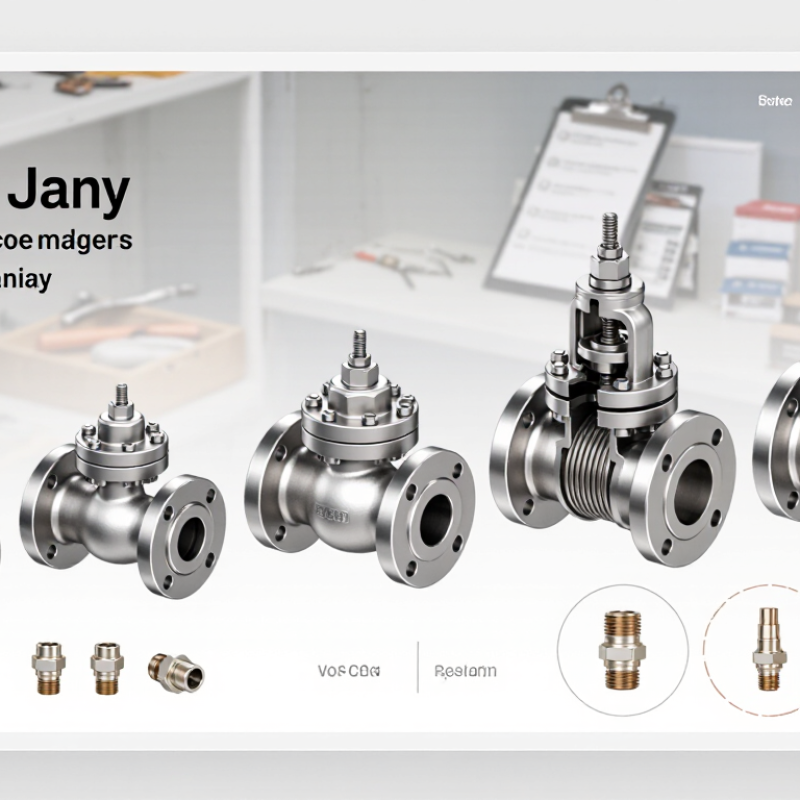
2026 Top API Bellows Sealed Gate Valves for Global Buyers?

What Are API Bellows Sealed Gate Valves?

What Are API Bellows Sealed Gate Valves?

An API bellows sealed gate valve is a gate valve fitted with a flexible metal bellows around its stem. The gate moves up or down to stop or allow flow through the pipe. As the stem travels, the bellows flexes while keeping process fluid separated from the outside air. This arrangement can reduce leakage through the stem area. It is useful where emissions control, worker exposure, or product containment matters.

The bellows is not a cure-all.

“API” refers to applicable American Petroleum Institute standards. Buyers should confirm which standard applies to the valve’s type, size, pressure class, and service; the bellows feature alone does not prove compliance. Check the material, temperature rating, pressure limits, and compatibility with the process fluid. For example, a valve handling hot steam faces different demands from one handling a corrosive chemical.

Small details matter.

Ask how many operating cycles the bellows is designed to withstand, and whether the valve has secondary stem packing. Packing can provide an added barrier if the bellows fails, but it also needs inspection. Look closely at the welds, bonnet construction, and maintenance access. A tightly sealed valve may still be a poor choice if its materials or operating range do not suit the actual line.
How Bellows Seals and Gate Mechanisms Work

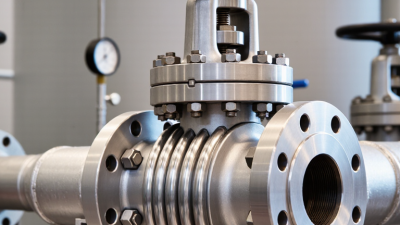
A bellows-sealed gate valve combines two moving parts with distinct jobs. The gate slides between the seats to stop or permit flow; the welded metal bellows flexes as the stem moves, blocking a direct path from the process fluid to the outside. Picture a small accordion-shaped sleeve beneath the bonnet. It compresses and extends with each stroke, while the stem still needs careful alignment to avoid twisting or fatigue.

The U.S. Environmental Protection Agency’s 1995 Protocol for Equipment Leak Emission Estimates gives gas-service valves an average emission factor of 0.0056 kilograms per hour in its SOCMI dataset. That figure is an inventory factor, not a guaranteed leakage rate for any particular valve. It helps explain why sealing design matters, but operating pressure, temperature, fluid, and maintenance change real-world results. The bellows is not immortal. Repeated cycling, corrosion, or pressure spikes can damage it, so many designs use stem packing as a secondary seal if the bellows fails. API 598 pressure-testing practices can help verify valve integrity, but buyers should also review the specified bellows cycle life, material compatibility, and inspection records. A slow, controlled stroke often protects the assembly better than forcing a sticky gate.

Which API Standards Apply to These Valves?

For bellows-sealed gate valves, API 602 is commonly relevant to compact steel gate valves, while API 600 covers larger bolted-bonnet steel gate valves. The correct standard depends on valve size, pressure class, materials, and service conditions. Scope matters. API 598 provides inspection and testing requirements, including pressure tests, but does not define the bellows design itself. MSS SP-117 addresses bellows seals for gate and globe valves; it is an industry standard, not an API standard.

Buyers should avoid treating an API designation as proof of leak-tight bellows performance. Ask suppliers to identify the exact standard edition and provide pressure-test records, material traceability, and bellows cycle-test evidence. For fugitive-emission qualification, check whether the project specification requires a suitable test standard, such as ISO 15848-1. The IEA’s Global Methane Tracker 2024 estimates that fossil-fuel operations released about 120 million tonnes of methane in 2023. That sector-wide figure is not a valve-specific leak rate, but it underscores why verified emissions performance matters. The standards do not answer every service question.

Tips: Confirm whether the valve is designed to API 600 or API 602, then check the bellows and testing requirements separately. Don’t rely on the nameplate alone.

How to Compare Leading Valve Designs in 2026

Comparing API bellows sealed gate valves in 2026 starts with the service conditions, not the catalogue headline. Record the medium, pressure, temperature, operating frequency, and installation orientation. A valve handling hot condensate may need a different bellows alloy and cycle rating than one isolating a clean, low-temperature process line. Details matter.

Look closely at bellows construction, stem guidance, and the backup stem seal. Multi-ply bellows can offer redundancy, but extra layers do not automatically mean longer service life. Ask for material traceability, weld inspection records, and test data for the complete assembly. Check how the design limits stem side-load and whether the bonnet gives technicians practical access. A polished datasheet is not enough.

Compare pressure-temperature ratings against the actual duty, then review applicable API requirements and project specifications. Confirm seat leakage criteria, shell testing, and whether the stated tests cover the bellows itself. Ask suppliers to explain cycle-test conditions, including stroke length and test temperature; a cycle count without context is hard to use. Also consider face-to-face dimensions, actuator compatibility, and spare-parts availability. These can affect installation and downtime more than a small purchase-price difference. One point is easy to miss: frequent cycling may deserve more attention than a high static pressure rating. I would still want operating history from a similar service, because laboratory results cannot capture every field condition.

2026 Top API Bellows Sealed Gate Valves for Global Buyers? - How to Compare Leading Valve Designs in 2026

Design configuration Typical construction and standards context Potential advantages Key trade-offs Typical selection considerations
Compact forged-steel gate valve with bellows seal Compact forged body and bonnet construction. API 602 covers compact steel gate, globe, and check valves in NPS 4 (DN 100) and smaller; confirm the applicable edition and the specific valve’s conformity. Compact construction can suit small-bore process, utility, and instrument-isolation duties. A bellows provides a stem-sealing barrier that can reduce reliance on conventional packing for primary containment. Smaller connection sizes limit use in larger lines. Bellows material, stroke, pressure, temperature, and cycle life require application-specific verification. Check end connections, pressure class, body and trim materials, bellows alloy, operating cycles, and whether packing is also provided as secondary containment.
Cast-steel bolted-bonnet gate valve with bellows seal Cast body with a bolted bonnet and rising stem is a common gate-valve arrangement. API 600 is a relevant design standard for steel gate valves; a bellows seal is an additional design feature, not a substitute for checking the valve’s stated standard scope. Can be considered for larger line sizes and general process isolation where a conventional cast-steel gate-valve layout is suitable. Bolted-bonnet construction allows access for inspection and maintenance. Requires space for the valve body and stem travel. The bellows assembly adds components that need suitable support, materials, and qualification for the service conditions. Compare face-to-face dimensions, end preparation, pressure-temperature rating, bonnet-joint design, stem orientation, and the manufacturer’s bellows cycle and emissions test data.
Pressure-seal bonnet gate valve with bellows stem seal Uses a pressure-energized bonnet joint, typically considered for high-pressure service. The pressure-seal bonnet and the bellows stem seal perform different functions; verify that both are included in the proposed design. The bonnet-joint arrangement can be appropriate for certain high-pressure applications. The bellows can provide a separate stem-sealing barrier where limiting stem emissions is important. Higher pressure does not automatically mean suitability at every temperature or with every fluid. Assembly, inspection, and maintenance procedures may be more specialized. Review the applicable pressure-temperature limits, pressure-seal materials, bellows design and weld details, pressure-cycle requirements, and documented testing for the exact configuration.
Extended-bonnet bellows-sealed gate valve for low-temperature service An extended bonnet can help keep the stem-sealing area away from cold process fluid. The valve’s materials and design must be specified for the actual minimum and maximum operating temperatures. May be suitable where stem operation and sealing need to be managed in low-temperature or cryogenic duties. Bellows construction can reduce dependence on stem packing as the primary seal. Extended length affects installation clearance and actuator or handwheel access. Low-temperature suitability cannot be assumed from the bonnet design alone. Confirm design temperature, material impact properties where applicable, bonnet extension, insulation and installation requirements, and testing at relevant temperatures.
Bellows-sealed gate valve with packing as secondary containment Combines a welded bellows stem seal with conventional stem packing arranged as a backup barrier. Fugitive-emissions performance depends on the complete valve design and the specified test procedure. Provides a secondary sealing element if the bellows is damaged, when designed and maintained as intended. Can be considered for services with stringent leakage-control requirements. Additional sealing components do not guarantee a particular emissions class or service life. Packing adjustment and maintenance requirements remain relevant. Request the applicable fugitive-emissions test evidence, such as testing to ISO 15848 where specified, and clarify acceptance criteria, test conditions, and maintenance intervals.

Comparison note: API 598 addresses inspection and testing of valves, ASME B16.34 covers pressure-temperature ratings and related valve requirements, and ISO 15848 provides fugitive-emissions test and classification methods for industrial valves. These standards do not by themselves establish that every bellows-sealed gate-valve design is suitable for a particular service. Verify the applicable edition, certification scope, materials, pressure-temperature limits, and test documentation for the exact valve configuration.

What Should Global Buyers Check Before Purchasing?

Before purchasing an API bellows-sealed gate valve, match its pressure class, temperature range, bore, and end connections to the actual line conditions. Check the body, trim, stem, and bellows materials against the fluid’s chemistry and expected corrosion. The NACE IMPACT study estimated corrosion costs at US$2.5 trillion annually, or 3.4% of global GDP. That estimate is a useful reminder: material selection affects long-term operating costs, not just the purchase price.

Tips: Request the pressure-temperature rating, material certificates, bellows cycle data, and test records. Check whether inspection and testing align with the specified editions of API 600 and API 598. For emissions performance, ask what test method and acceptance criteria apply; do not assume “bellows sealed” alone proves a specific leakage rate.

Review the operating profile, too. Frequent cycling, thermal shocks, or prolonged throttling can affect service life, even when the valve meets its nominal rating. Ask how the bellows assembly is protected during installation and whether the supplier can provide traceable inspection results. A polished datasheet is helpful, but it cannot replace clear test evidence. One detail buyers sometimes overlook is future maintenance access. Measure the space around the valve and confirm that replacement parts can be sourced when needed.