2026 How to Choose the Best Forged Steel Ball Valves for Your Needs?
Choosing the right Forged Steel Ball Valves can significantly impact operations. These valves are essential in various industries, including oil and gas, water treatment, and chemical processing. Their durability and reliability make them a preferred choice.
When selecting Forged Steel Ball Valves, consider factors like pressure ratings, size, and material compatibility. Each application has unique requirements. A valve that works well in one situation may fail in another. This reality can lead to costly errors and downtime.
Not all valves are created equal. Some may not meet your expectations or needs. Take time to assess your options carefully. Ask questions and seek expert advice. The right choice enhances performance and can prevent future issues. Valves should provide safety and efficiency. Always reflect on your choices to ensure they align with your operational goals.
Understanding Forged Steel Ball Valves and Their Applications
Forged steel ball valves are crucial in various industries. They are known for their durability and reliability. Virtually all sectors, from oil and gas to water treatment, utilize these valves extensively. According to a recent market report, the global forged steel ball valve market is expected to grow by 5% annually, driven by increasing industrial activities. This underscores their importance in manufacturing processes.
The applications of forged steel ball valves are diverse. In oil and gas, they control the flow of fluids effectively. In power plants, they help regulate steam and water flow. Their robust construction withstands high pressures and temperatures. However, the selection process can be tricky. Factors like pressure ratings and material compatibility must be considered. A mismatch can lead to leaks or failures, resulting in costly repairs.
Maintenance is another area that often gets overlooked. Regular checks can prevent severe issues. Some studies indicate that nearly 30% of valve failures arise from a lack of proper maintenance. It’s essential to develop a routine that addresses this. Ignoring wear and tear can compromise safety and operation. Ultimately, a well-informed choice is essential.
2026 Forged Steel Ball Valves Applications and Material Strength Comparison
Key Factors to Consider When Choosing Forged Steel Ball Valves
When selecting forged steel ball valves, several key factors come into play. The material quality is crucial. It ensures durability and resistance to corrosion. Many reports indicate that high-quality steel can enhance the valve's lifespan, reducing maintenance costs by up to 35%.
Consider valve sizes carefully. Mismatched sizes can lead to flow issues. For instance, a too-small valve may restrict flow and increase pressure drop. Assess the pressure and temperature ratings of the valve to match your application. Industry studies suggest that nearly 20% of failures are due to improper valve specifications.
Tip: Always check compatibility with your system. If unsure, consult an expert to avoid costly mistakes. The working environment also matters. High temperatures and aggressive media can impact valve performance significantly. Taking these factors into account can lead to more informed decisions. The right choice leads to efficiency and reliability in operations. Mistakes are costly, so reflect on your specific needs before making a purchase.
Comparing Different Types of Forged Steel Ball Valves
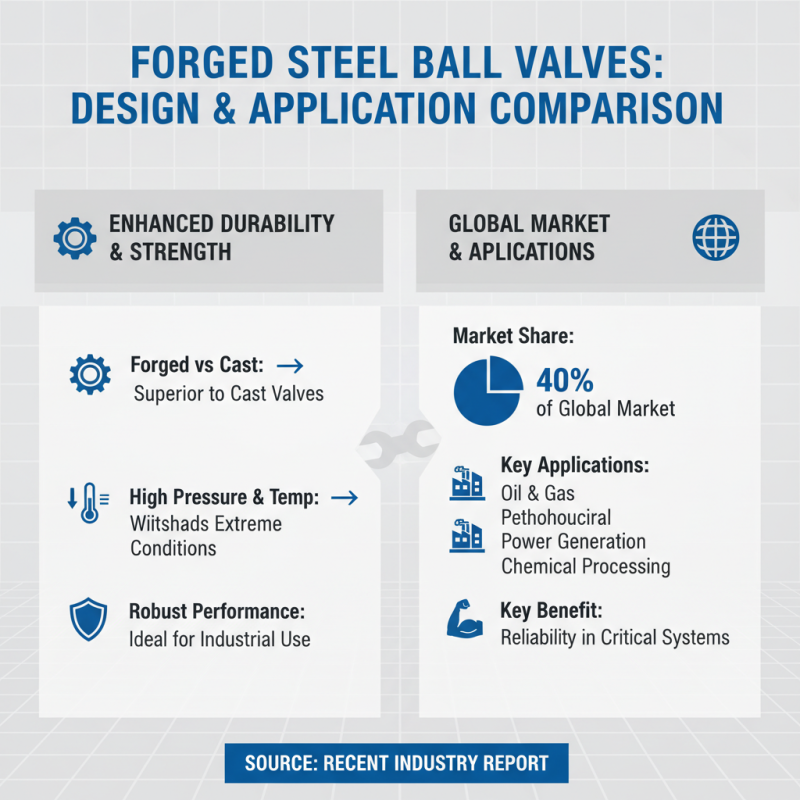
When comparing different types of forged steel ball valves, it is crucial to consider their design and application. Forged steel valves generally offer enhanced durability and strength compared to cast valves. They can withstand high pressures and temperatures, making them ideal for various industrial applications. According to a recent industry report, forged steel ball valves account for approximately 40% of the global market due to their robust performance.
The main types of forged steel ball valves include three-piece, two-piece, and one-piece designs. Each has its advantages and disadvantages. For instance, three-piece valves allow for easy maintenance but might be bulkier. Two-piece options are more compact but less accessible for repairs. A study indicated that 25% of users faced difficulties in maintenance with two-piece models, leading to downtime and increased costs.
Experts suggest that the selection of the right type should be based on specific needs. Consider the fluid type, pressure, and temperature conditions. Often, users overlook these factors. This oversight can lead to operational inefficiencies. Understanding your applications thoroughly can help in making an informed choice.
Maintenance Tips for Ensuring Longevity of Forged Steel Ball Valves
Forged steel ball valves are essential in many industries. Proper maintenance is crucial for their longevity. Regular inspections can help identify potential issues. Check for leaks, corrosion, and proper alignment. This should happen at least every six months. Using the correct tools is vital. A wrench that fits snugly prevents damage to valve components.
Cleaning is another critical aspect. Dirt can accumulate, leading to performance problems. Use a soft cloth to wipe down the exterior. For stubborn grime, mild soapy water can help. Avoid harsh chemicals. They might damage the finish. Lubrication is also necessary. Applying the right lubricant keeps the valve operating smoothly. However, don’t overdo it. Excess lubricant can collect dirt.
Consider environmental factors too. High temperatures and humidity can affect valve performance. In such cases, additional protective measures may be needed. Reflect on your usage patterns. You might notice that some valves wear down faster than others. Adjust maintenance schedules accordingly. In the end, each valve requires a tailored approach.
2026 How to Choose the Best Forged Steel Ball Valves for Your Needs? - Maintenance Tips for Ensuring Longevity of Forged Steel Ball Valves
| Feature |
Importance |
Maintenance Tips |
Expected Lifespan |
| Material Quality |
High-quality forged steel offers durability and resistance to corrosion. |
Regularly inspect for corrosion and apply anti-corrosive coatings. |
10-20 years depending on environment. |
| Size & Pressure Rating |
Proper sizing ensures optimal performance under pressure. |
Check sizing regularly; consider using pressure gauges. |
5-15 years if properly sized and maintained. |
| Seal Quality |
Good seals prevent leaks and ensure tight shut-off. |
Inspect seals regularly; replace worn seals promptly. |
Up to 10 years with regular monitoring. |
| Maintenance Frequency |
Regular maintenance extends valve life and performance. |
Establish a maintenance schedule; include cleaning and testing. |
7-15 years depending on its maintenance history. |
| Installation Quality |
Proper installation is critical for optimal functioning. |
Ensure professional installation; check alignment and connections. |
Lifespan influenced heavily by installation; typically 10-20 years. |




 Zalo
Zalo