2026 Top Din 3352 F4 Resilient Seated Gate Valves Trends?
The demand for Din 3352 F4 Resilient Seated Gate Valves is expected to grow significantly by 2026. This growth reflects advancements in technology and enhanced manufacturing processes. The introduction of AI-driven search tools at major trade shows, like the 2026 Canton Fair, may influence this trend.
Innovations in valve design and efficiency are key factors. Manufacturers are focusing on improving durability and performance. However, challenges remain in balancing cost and quality. The market needs to address these issues while meeting rising consumer expectations.
Finally, as the industry evolves, staying updated on trends is crucial. Resilient seated gate valves must adapt to changing market conditions. Striving for continuous improvement is essential for success in this competitive landscape.
Recent Innovations in DIN 3352 F4 Resilient Seated Gate Valves
Recent innovations in DIN 3352 F4 resilient seated gate valves are transforming the industry. These valves play a critical role in water supply, wastewater treatment, and industrial applications. According to a recent market report, the global demand for resilient seated gate valves is expected to grow by 5.2% annually over the next five years. This suggests a robust market for these components, but challenges remain.
In terms of design, advances in materials are noteworthy. Manufacturers are experimenting with different elastomers and metals to enhance durability and resistance to corrosion. For example, the introduction of improved seals has led to higher pressure ratings and longer operational life. Nevertheless, some existing designs still face issues like leakage and maintenance complexity. This raises questions about the lifecycle costs versus initial savings.
Technological integration is another key trend. The use of smart sensors in valves allows for real-time performance monitoring, improving efficiency. However, the cost of these technologies can be daunting for smaller operations. Additionally, there is a growing concern about the environmental impact of materials used in production. Sustainability is not yet fully addressed. As the industry evolves, innovative solutions must also take these challenges into account.
Key Market Drivers Influencing Gate Valve Trends by 2026
The market for resilient seated gate valves is evolving rapidly. By 2026, several factors are driving changes in this sector. One key influence is the growing emphasis on energy efficiency. Companies are increasingly prioritizing sustainable practices. This shift necessitates the adoption of advanced valve technologies that reduce energy consumption.
Another important driver is the expansion of infrastructure. Global projects in water supply and wastewater management require robust and reliable valves. Stakeholders seek products that ensure minimal leakage and prolonged service life. Enhanced durability is highly valued in these contexts.
Tip: Always consider the installation environment when selecting valves. Corrosive environments may require specific materials.
Emerging economies are also making a significant impact. As industrialization continues, there is a rising demand for gate valves. However, the challenge lies in ensuring quality amid rapid growth. Manufacturers must focus on quality control to maintain their market position.
Tip: Regular maintenance can extend the life of gate valves. Neglecting this may lead to costly replacements.
Consumer preferences are changing too. There's a shift towards cost-effective solutions without compromising quality. Valves that balance price and performance will likely gain market traction in the coming years.
Analysis of Material Advancements in Gate Valve Manufacturing
The gate valve industry is witnessing significant advancements. These developments focus on materials that enhance performance and longevity. Recent innovations include improved alloys and composites. These materials resist corrosion better than traditional options. They also offer enhanced strength and durability. This is crucial for applications in demanding environments.
The choice of material affects the valve's efficiency. Lightweight materials can reduce operational strain. However, not all lightweight options are durable. Some may not withstand high pressures. Manufacturers face the challenge of balancing weight and strength. They continue to experiment with new combinations. The goal is to develop valves that perform reliably over time.
Yet, some improvements still raise questions. For instance, cost vs. benefit remains a concern. New materials can be expensive. The return on investment may not always justify the expense. Companies must evaluate whether these advancements meet their needs. This ongoing dialogue is important in shaping future designs.
2026 Top Din 3352 F4 Resilient Seated Gate Valves Trends
| Material Type |
Corrosion Resistance |
Temperature Range (°C) |
Applications |
Market Demand (2026) |
| Ductile Iron |
High |
-10 to 80 |
Water Supply |
Increasing |
| Stainless Steel |
Very High |
-50 to 300 |
Oil & Gas |
High |
| PVC |
Moderate |
0 to 60 |
Chemical Processing |
Growing |
| Copper Alloy |
Moderate |
-30 to 100 |
Marine Applications |
Steady |
| Bronze |
High |
-20 to 120 |
Marine & Industrial |
Stable |
Impact of Sustainability Regulations on Gate Valve Design Trends
The design of gate valves is shifting. Recent sustainability regulations are influencing trends across the industry. Manufacturers now prioritize eco-friendly materials. This shift is essential as the global market for resilient seated gate valves is expected to reach $2.5 billion by 2026.
Recent studies indicate that about 60% of companies are investing in sustainable practices. This includes using recycled materials and reducing production waste. Innovations in valve compositions are transforming designs. Biodegradable lubricants and less hazardous coatings are becoming more common.
However, not all manufacturers are keeping pace. Some still rely on traditional materials. This can raise concerns about long-term environmental impacts. There needs to be a balance between cost and sustainability. While new designs are promising, they often face scrutiny for performance. The challenge remains to meet regulations while ensuring reliability. Striking this balance is crucial for future growth in the industry.
Comparison of Global Market Shares for DIN 3352 F4 Gate Valves
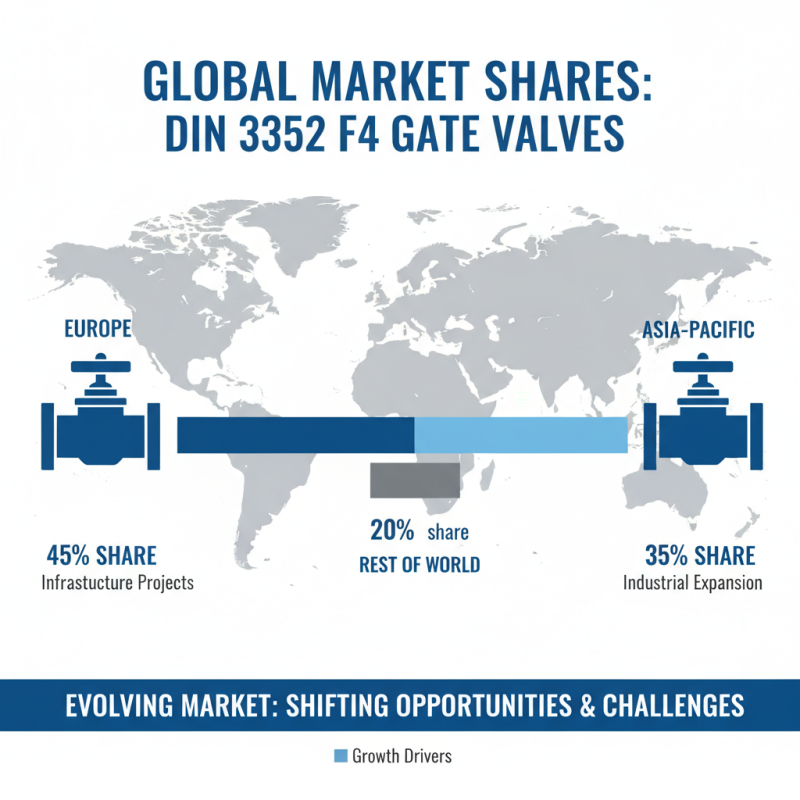
The global market for DIN 3352 F4 resilient seated gate valves is evolving. Various regions are showing different growth trends. The European market holds a significant share, driven by increasing infrastructure projects. Meanwhile, Asia-Pacific is rapidly catching up, fueled by industrial expansion. This shift presents opportunities and challenges.
Market players face pressure to innovate. Often, companies struggle to differentiate their products. Quality control remains a concern. Many manufacturers are exploring new materials to enhance durability. However, the transition can sometimes lead to inconsistencies. Smaller firms may find it hard to compete against larger entities.
Sustainability is gaining importance. Buyers are looking for eco-friendly options. Yet, there is confusion over what qualifies as sustainable. This inconsistency can lead to distrust among consumers. Companies must refine their messaging and product offerings. Clear communication is vital in this evolving landscape. The competition is fierce, and understanding these market dynamics plays a crucial role in future success.




 Zalo
Zalo